
7 Home Remedies for Urinary Tract Infections

What is the 2nd most common reason people visit a doctor each year? UTIs. Over 8 million women come in for for UTI treatments every year, and around 20 percent of them will come back again later with another UTI complaint. If a UTI lasts longer than 2 days, it requires medical from somewhere like Advanced Gynecology.
There are many home remedies people use to prevent UTSs:
1. Baking Soda: 1 teaspoon baking soda to a glass of water as it may help ease your infection.
2. Blueberries and …
3. cranberries (or real juice, about 2-4 glasses per day), and …
4. Pineapple
5. Water, about 8 eight-ounce glasses a day, to urinate every 4-5 hours or frequenter.
6. Vitamin C, at least 5,000 mg or more of vitamin C a day
You could also consider trying products that contain d-mannose, like HARMONY Urinary Tract & Bladder Cleanse, for effective urinary care from a dietary supplement.
Urinary Tract Infection DOs and DON’Ts!
DO:
Urinate frequently. Consider cotton (fabric). Do take a nonprescription pain reliever (acetaminophen, ibuprofen, aspirin). Try a condom instead of a diaphragm. Wipe from front to back.
DON’T:
Drink alcohol, caffeine (tea/coffee), have unclean sex.
For more photos/information, visit This Website
DIY Backyard Chicken Coop
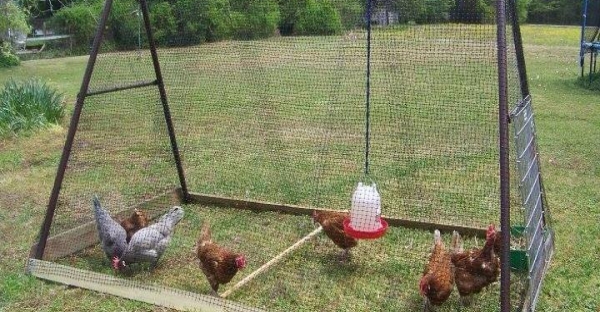
Chicken coops are increasingly popular. You can’t have a chicken coop everywhere, and it takes some work to maintain one, but you get free eggs. You can share the eggs, too, and even sell them. It’s something you can do at home, and it will make you somewhat self-sufficient.
Here’s a guy who build his own coop out of his kid’s old swing-set. He thought of the project after seeing something a user at Backyard Poultry had done and with the use of pictures of chicken coops for research he was able to make one of his own.
But he used mostly wood for his construction. It was cheaper, because he already had a lot of wood around his house.
He found he was able to use, besides the frame of his kid’s swingset, old fence palings (he still needed more though), pallets, lawnmower catchers, a screen door, bush rocks (he used these to fox-proof his yard), fiberglass, bricks, rocks, and logs.
He ended up having to buy some things himself, such as the aviary wire, some nails, screws, hooks, etc., and some treated pine palings.
The chicken coop ended up, as you might expect, triangluar. An A-frame based on the swingset.
He set the lawnmower pouches in sawdust to serve as nest boxes (he had the hard plastic box-type, not the soft folding bag type that seem to be more common).
Unfortunately, the chickens didn’t begin laying eggs. The owner said they had been under quite a bit of stress, as they were rescued chickens.
Rescue chickens are those that have been recovered after their previous homes were found to be in violations and closed down to chicken farming.
The prices for rescue chickens don’t even cover the costs of the rescue, but they only allow 15 chickens per person in some adoption places (not sure if you would need more). They cost 10 dollars each if you buy up to four (in California at the Animal Place (.org). They’re 7 dollars if you buy five to ten though.
For more photos/information, visit This Webpage
Build an Outdoor Room This Weekend
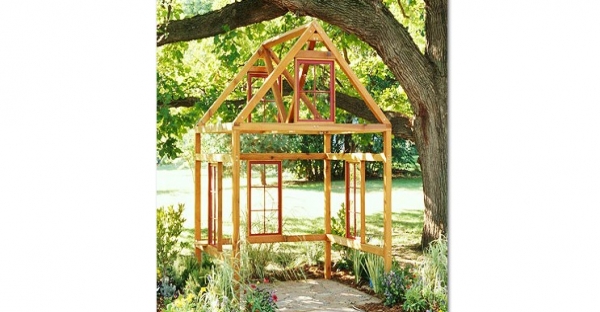
With one DIY outdoor structure you can build, you can modify it to have three customized rooms.
So what this is, basically, is a frame of a room with a frame of a peaked roof and frames of five windows (one on each of three sides of the building and two on each upright side of the peaked roof (the front and back of the roof, not the sloped sides). It doesn’t have anything on the bottom. The structure just stands there, and has one open side. The roof is just corrugated aluminum (but you could also use clear corrugated plastic, which would let in even more light for your plants, but would not give you much shade under your structure).
And that’s really all it is. You can drape curtains for walls that you can open and close.
Building it: For the basic structure, level off a piece of land 7 and 3/4 feet square. You can use a shovel for this. (Make sure you check the building codes for where you live first. Your outdoor room may have to sit on concrete footings for stability.) The basic structure is made with 12 18-24 inch long wooden stakes.
To bring out the color of cedar wood, use a coat of deck sealer.
If you have a garden in your yard, you might want to build your outdoor room next to it. It will also provide shade for a planting station.
The roof can be made of 2X8 sheets of corrugated aluminum. They can be cut with tin snips (be very careful here, and use gloves for the task–aluminum sheets can cut DEEP). Once cut, the sheets can be screwed into the structure, overlapping each other and at the top seam. The top can be capped with an aluminum roof cap.
For the window box, use aluminum duct covers. First screw/nail a 2X4 to the structure, then screw the duct covers onto it. When its set up, a plant pot will sit nicely inside each cover.
For the roof, stretch wires across the roof beams–tight. Attach grommets to the top edge and bottom edge of the fabric panels. This will allow the panels to slide open to suit you.
For more photos/information, visit This Website
Custom Semi Truck
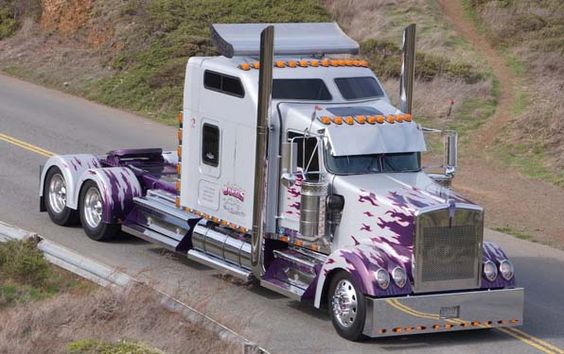
Another Kenworth W900, a good basis for customizing, according to many, whether as a semi to operate, as a show piece, or to use to add an luxury motorcoach unit onto it.
Lots of light on this one, chrome, beautiful painting. Tire sizes went from 24.5 to 22.5. This Kenworth has a sleeper studio 86. Big “bumper” cover changed with new headlights.
It has an upscale interior with Hi-Fi, LCD TV and many watt sound system.
A big spoiler overlooks the cabin. Many fans buy trucks like this one for less than $20,000 and use them to customize for truck shows. The price of the preparation often exceeds that of the truck.
The 1999 Kenworth has a Caterpillar engine.
The first version of this custom semi was finished in 1997 with a very short cab. In 2000 the owner decided to extend the cabin 12 feet, not a big visual difference, but a lot of work.
Then a completely new paint job was done on the rig.
This Kenny has been associated with Bruce Springsteen’s “Magic” North American Tour in 2007, but I’m not sure exactly what the association is. Was this truck used to tow the musician’s trailer? If anyone knows, let us know.
The W900 is still made by Kenworth, and is advertised as a comfortable, stylish ride. Its a class 8 truck model, known for its long-nose style. Over time, the K900 saw other models, such as the T600, come into use — more aerodynamic — but the W900 has remained a production model, which is partly due to its plain popularity with trucking owner-operators.
International Lonestar, Already-Unique Truck Customized

This custom semi is owned by Regional International and is a bit of a fan favorite for the trucking company. It also has a “totally custom, matching trailer” to go with it.
It’s a 2011 International Lonestar called “Bad Habit” by its owners.
This truck is done by Elizabeth Truck Center (Anthony Pesce and the crew there in New York).
The custom big rig end of the Pesce’s collision company wasn’t to “make a real impact” with this truck.
International’s made a big push to try to compete with the custom market of Peterbilts and Kenworths. International is a proven truck, Pesce said. The design to begin with is good. The design of the semi is not like anything else being made, he said.
First they lowered the truck by modifying the front suspension, to get 4 inches. They couldn’t get much out of the rear suspension, though, he said. They lowered the bumper, but when Pesce talked about the rig, they had plans to replace it.
The stock grill is plastic. The custom semi team wanted to take it back — reminiscent to a 38 Ford, some think — made a metal grill. They added custom bents and lights.
They put glass lenses on the air cleaners. The extended the fenders, something that the custom shop does a lot.
The paint is a “true candy” apple red. A spray gun passed over the truck 42 times. “There’s nothing stock about this paint job,” noted Pesce.
Graphics and Candy Orange Peterbilt

This custom semi is known as “The Beast,” and was done by Elizabeth Truck Center. The Beast is/was a graphics-covered candy orange Peterbilt. It has a candy apple red frame and it took some awards back in the day when it was new. This machine took over 8,000 hours over 4 months, and the work was reportedly intense, and was led by Anthony Pesce out of Staten Island, New Yorks, Car Craft Works facility (of Elizabeth Truck Center).
This custom Peterbilt was Pesce’s first Big Rig Build-Off entry at the Mid-America Trucking Show in 2005.
The history of this truck: it was an auto carrier before the custom shop built it into an orange styled show piece for truckers.
Perce has been in the auto shop life since birth. His dad and uncle had a heavy collission business in Brooklyn, and that shop expanded to New Jersey and New York sites. I’m sure they have some great gps for truckers.
Four years before this custom Pete won its first show piece awards, the Pesces opeend a chrome shop as a side and complement to their collision business. It’s became well-known among truckers for its designs and accessories.
The truck pictured here. Specs:
Model: Peterbilt 379
Year: 1999
Wheelbase: 330 inces
Engine: Caterpillar 3406E
Horsepower: 550
Transmission: 18-speed, 3.25 rears
Shining Black Pete
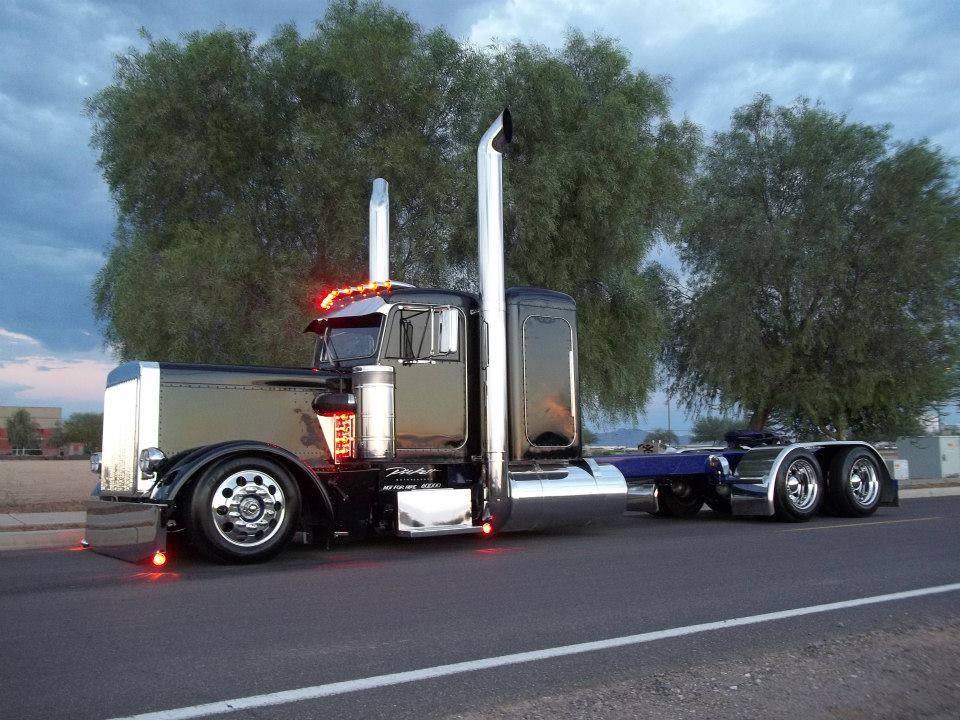
This black prime mover owned by Rod Pickett of Pickett Custom Trucks. This 1977 Peterbilt works 5 days per week with Pickett, who’s from Marysville, Washington. The custom semi tractor was built by Picket’s company, Pickett Custom Trucks, and has made the circuit of custom shows since at least the year 2000, it looks like, and under a few changes of appearance. The truck had blue and purple paint stylings in 2000 when it entered “Pride in Your Ride,” a custom truck show in Lynden, Washington.
This Peterbilt used to haul cars, reportedly, but Pickett sold the car hauling trailer to haul race cars exclusively long ago.
Some details from Hanks Truck Pictures: ” Rod bought the trailer from Art Morrison. It was originally 12 feet high. After buying it they came to the conclusion that it was too short to haul three full size race cars so over the winter we added to the top. Its now 13’8″ high and it wouldnt be the Picketts not to add custom wheel wells a custom paint job a whole bunch of lights and some polishing. It was alot of fun actually. Many people think the Picketts are crazy but you have to hand it to them, they (Dale(Rod’s Dad) Rod and Kevin are very talented).”
Rod Pickett did a bunch of custom semi trucks besides this 77 Peterbilt. From what I’ve seen, he customizes pretty much all Peterbilts, mostly 379s, or used to, including dump trucks, cement mixers, rock bed transfer dump trucks, fire trucks — pretty much any type of big semi that someone might want customized. But there’s some other trucks in there too, like Kenworths and an old International custom.
Have you ever heard of Studio Ghibli?
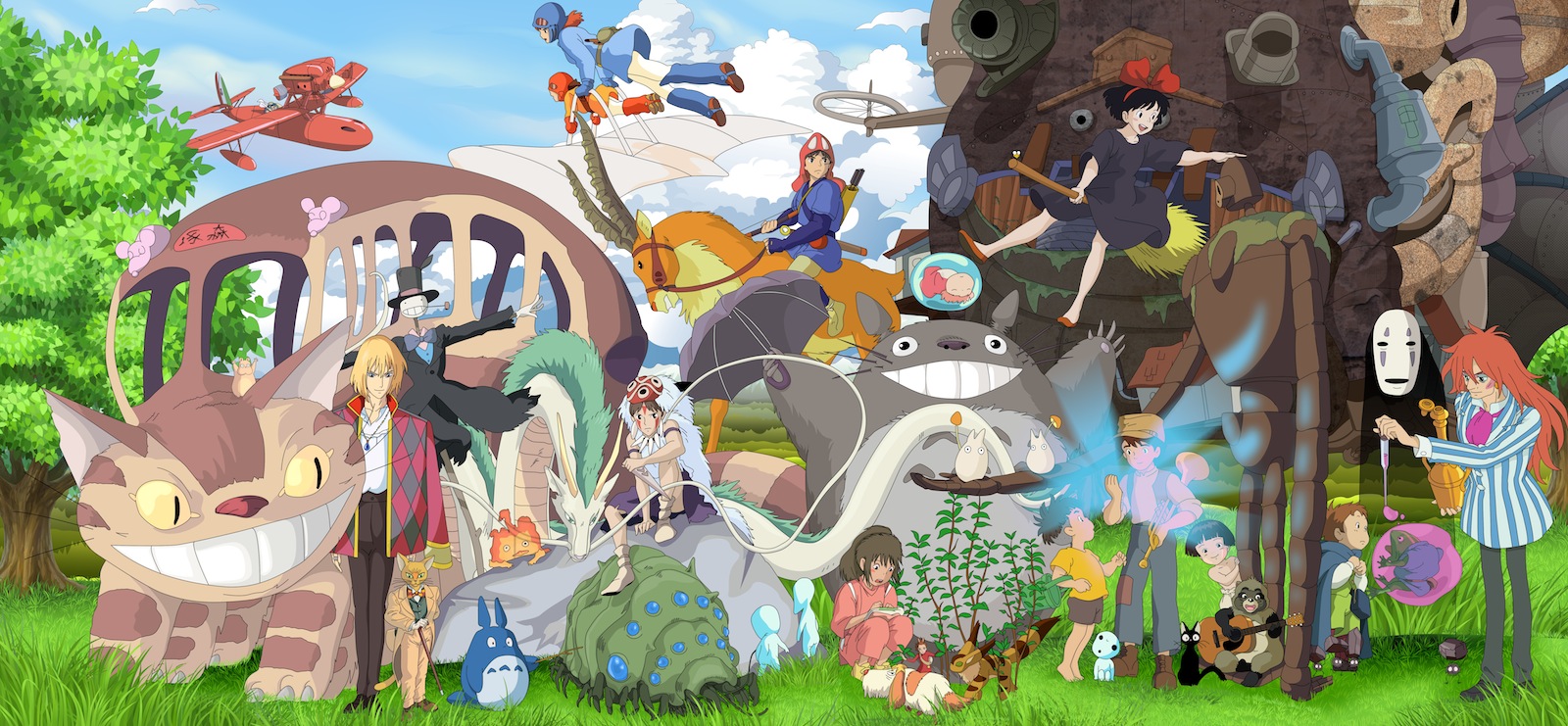
Here’s a quick question. Have you heard of Studio Ghibli?
For those who don’t know, Studio Ghibli is perhaps the most influential film producer in Japanese animation, and perhaps the world. Studio Ghibli were Pixar before the storyboards for Toy Story were even conceived of. The extraordinary quantity of artistic masterpieces that have come from Studio Ghibli is something to marvel at, their most popular being 2001’s “Spirited Away”.
“Spirited Away” is a seminal film in the history of the medium itself. It’s difficult to encapsulate why “Spirited Away” is so important, but for many people it’s likely because “Spirited Away” was their very first exposure to Japanese Animation at all, grossing $330 million worldwide. “Spirited Away” is Japan’s most profitable, successful and widespread film of all time. Some have even went as far to say it exceeds Akira Kurosawa’s “Seven Samurai” as the most important film to come out of Japan.
And it’s all because of Studio Ghibli and perhaps more so to do with one of the great film auteurs of our time, Hayao Miyazaki. Miyazaki helmed the vast majority of Studio Ghibli’s films providing us with some of the most mature exploration of adult themes through child like wonder and absolutely gorgeous art. Many of Studio Ghibli’s films explore themes such as death, loss, and the end of childhood innocence through surreal creatures and landscapes that escape description. The studio exudes pure creativity, an increasingly rare trait that sees much success lately.

Studio Ghibli hasn’t just been instrumental in making Japanese Animation internationally recognised, but due to this international attention small animation companies in Japan were able to receive more funding and bring their creations to life. Great innovators of the genre such as the creator of “Akira” have cited Miyazaki as a great influence on them. It’s hard to track exactly, but I’d be willing to say that many of the animations that make it big have integral creative roots in the raw creativity of Mr. Miyazaki.

Granted, they’re not for everyone, but I would wholeheartedly recommend a watch of any Studio Ghibli film. Although if I were to only recommend a few they’d be “Ponyo”, “My Neighbour Totoro”, “Howl’s Moving Castle”, “The Wind Rises” and of course “Spirited Away”.