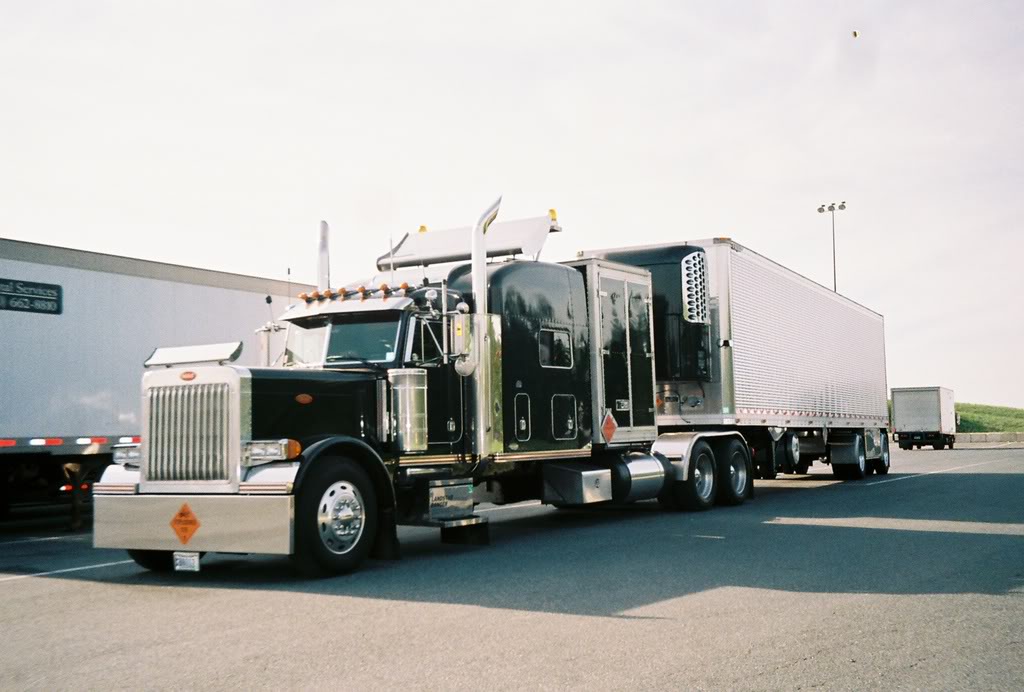
Future Truck
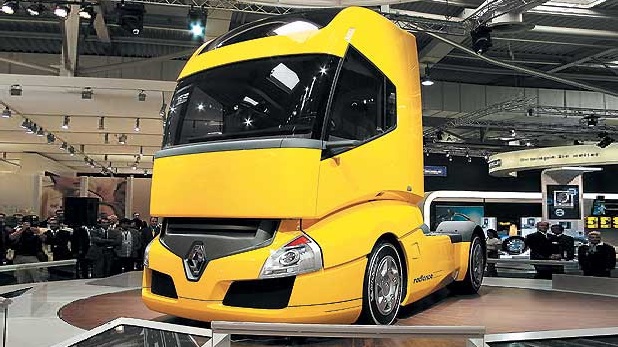
This future semi tractor has been referred to as a “dream truck” by its creators. It features several forward-thinking semi truck features that have appeared on a lot of the concept models of recent years.
It’s called the “Radiance” by Renault, and it was concept-ed and designed by a Renault team featuring Xavier Allard and Patrick Le Quement I.
It’s based on Renault’s Premium design, and this concept truck has already been manufactured in prototype, as you can see. The prototype can hit speeds of up to 30 kilometers per hour.
Features of this concept semi truck:
-Electrical steps that come out of the bumper for easier boarding
-Replaces mirrors with cameras to cut drag
-Electronic parking computers, direction and system brakes
-Retractible gear lever
-Glass roof
-Convertible sofa bed
-Michelin tires and rims
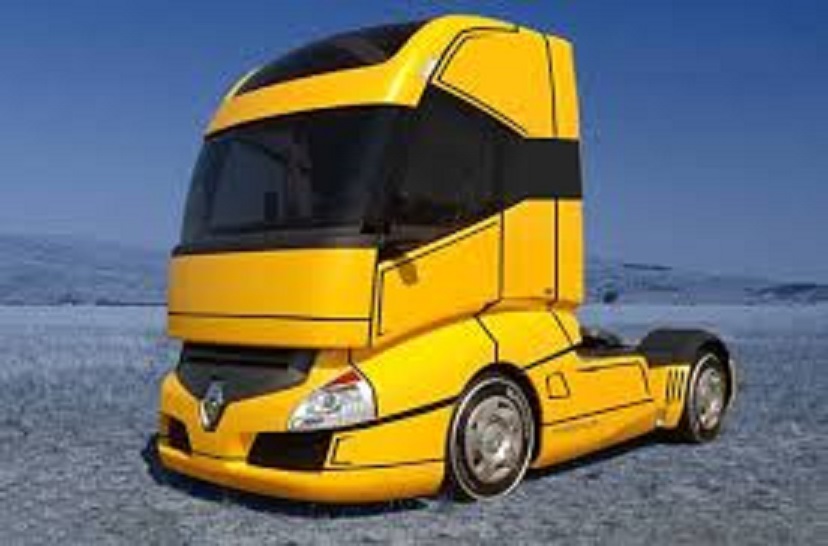
Future Trucks? This Company Already Built One
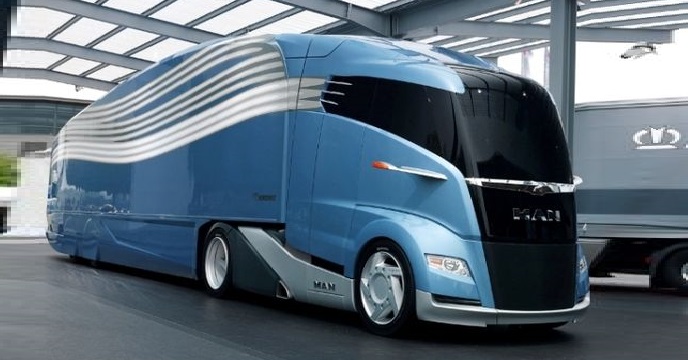
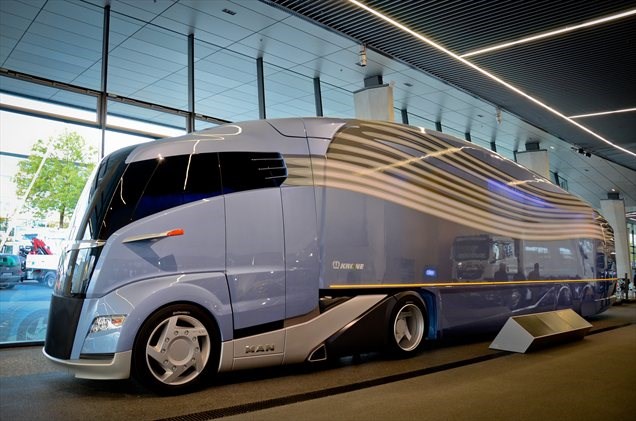
Focusing on drag coefficient with computational fluid dynamics, this modern semi tractor has a few scientifically-tested design features. It’s called the Concept S, by MAN (the company).
We have the profile picture of it here that shows its aerodynamics. It looks somewhat knifelike, or maybe more fishlike. It reminds me of the front end of whales and other large marine life, which are aero- or water-dynamic – in their own ways.
This MAN concept truck though has a draf coefficient of 0.3. That means its about as aerodynamic as your average car on the road. It’s a European cabover, so it can be compared with other European cabovers, where the average drag is 0.5.
I’m a bit curious what would be require to have aerodynamics of 0.1!
In order to cut down drag as much as possible, some things have been removed … or replaced. For example, there are no rearview mirrors, because they meet the oncoming wind and slow the truck down. Instead, thin wings extend with rearview cameras.
The fuel tanks are also tucked in. Every design effort was made to minimize drag around the entire truck exterior.
When this tractor has a trailer, it is proposed it uses a “teardrop” shaped trailer — one that gets smaller as it nears the rear end of it, to further reduce drag. However, that would probably cause serious problems for loading from the back of the tractor.

Future Truck
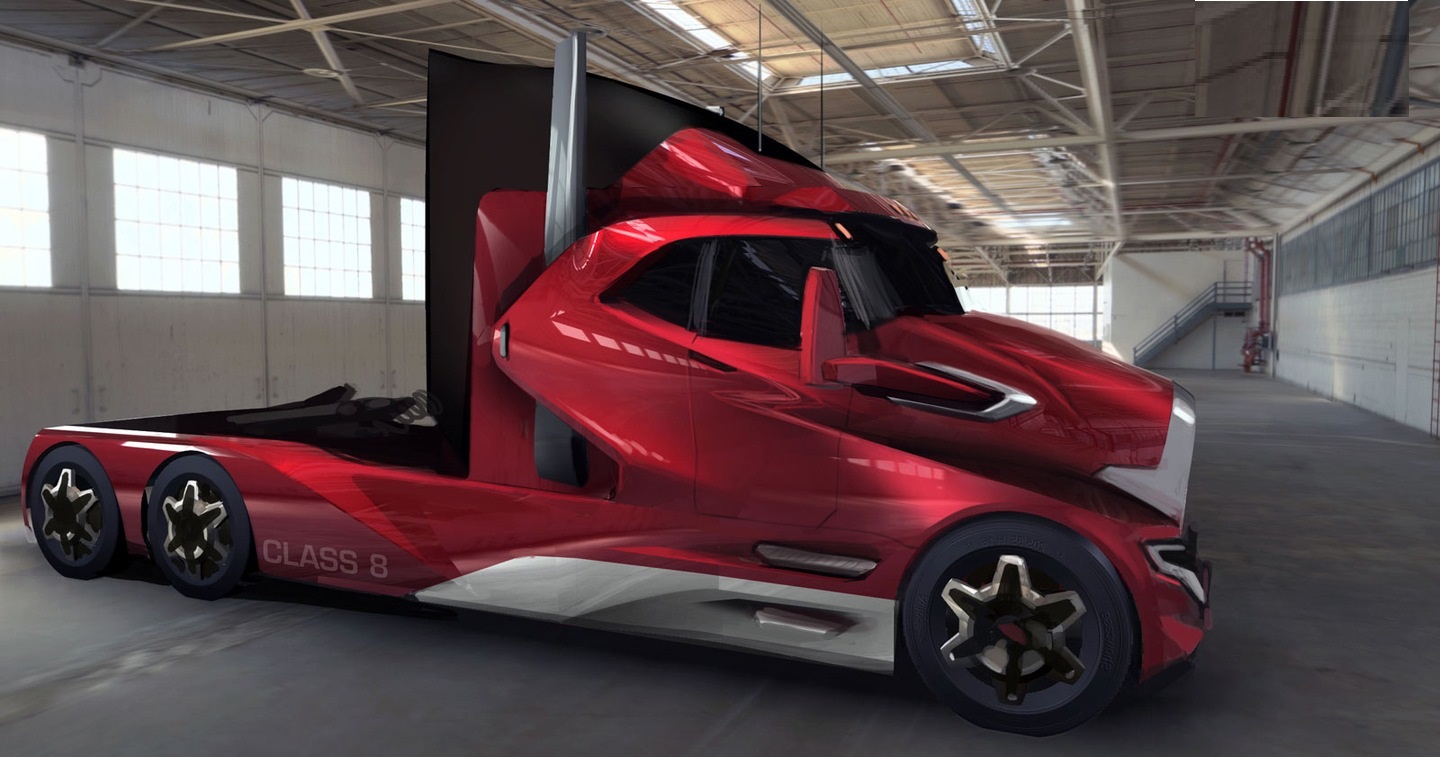
The new Peterbilt tractor design submissions have been something we’ve been looking at recently. Looking more in depth at this particular big conventional design for a Peterbilt in coming years, let’s consider what kind of things we want to see change on semi tractors.
Fuel efficiency is a given. Almost all the goods anyone has in any country, including the US and Canada, is at some point shipped using a commercial truck. That means we’re using a lot of fuel, burning it off into the environment, but also that we’re making our goods and services more expensive domestically. Since we’re in competition with countries that have cheaper labor and more lenient environmental protections laws, we’re reducing our competitiveness by not making our transport industry cheaper.
But we do have things those cheap-labor markets don’t have, like first rate technology and scientific resources. We can come up with the best designs, the newest technology, and thereby make our domestic shipping industry cheaper and more competitive, it seems to me. Am I wrong here?
Well, turning to this particular semi design, and considering truck “improvements,” let’s look at some of the things the vehicle designer himself thought he wanted to work on with his design, which I’m going to guess was partly based on the request Peterbilt put out when they began their modern truck design competition (the prize was $10,000, reportedly, but I think the competition is over now):
The design should be “ultra fuel-efficient” in order for truck investments (new vehicle purchases) to “pay for themselves” by reducing other costs associated with running commercial freight. (main practical goal: minimize surface exterior drag).
The design should also have parts that can be interchange — like wheel covers, farings, etc, so that more fuel efficient parts can be swapped for.
The design should have built in electronics that work reliably (this design comes from someone who knows this part of the business — the guys behind Rainey’s Truck Parts). They wanted to be able to adjust performance when they wanted to do so, without difficulty or further problems associated.
Well truckers, what would you add to this list of future truck design features needed?
Visit Rainy’s Truck Parts (click here). Visit Local Motors (click here). OR read more about this “future truck” (click here). OR see the 2 other future semi truck designs (click here).
Future Truck

This big truck is a Scania semi design by an artist named Mikael Lugnegard on the website “Deviant Art”. He calls the concept truck, by the looks of it, “Wolfman”.
It’s a futuristic-themed concept art truck, but actually, the model is more or less the same as what’s running today.
It looks somewhat like a W900 to me, crossed with an older needle nose maybe, and with some customization like re-modelling the hood up higher and chopping down the windshield (or, because the hood is higher it just takes most of the windshield).
Guess you’d have to raise the cab seats a bit to see out this one.
It also has, by the looks of it, custom rims — of the sort people might see more often on a custom truck than a daily runner. And it has double-stack pipes, and thick ones at that.
Then there would be a custom grill and custom headlights. Other than that, I think this truck could possibly be put onto the road.
Oh, and the semi trailer. I don’t know if many semi truck owner-operators would want to cut the corners out of their load space, but it does add a unique look.
Custom Luxury Motorhome
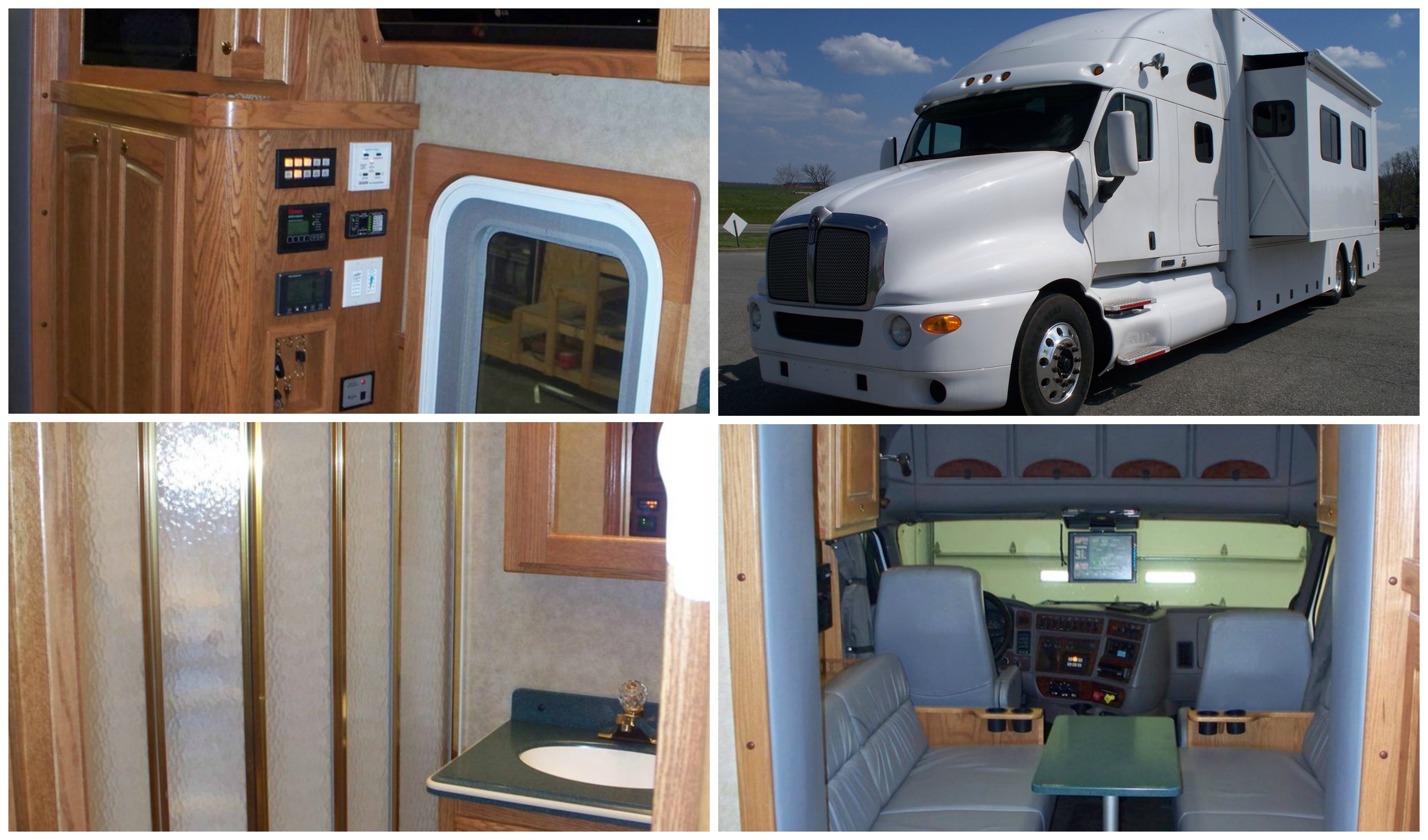
This is a custom motorhome built by a company I just learned about, Hawk Engineering, that does custom built motorcoaches out of Kirkwood, Missouri.
This big white motor coach (photos below) is a show model, to show what the custom co would do for its customers. It’s a show model, so that means you can usually see a lot of the best features and work a company has to offer, because they put it all in.
This truck is a 2002 Kenworth T2000. It’s powered by a 460 horsepower Cummins N14 engine and has a 10-speed automatic transmission. The truck has 485,000 miles on it.
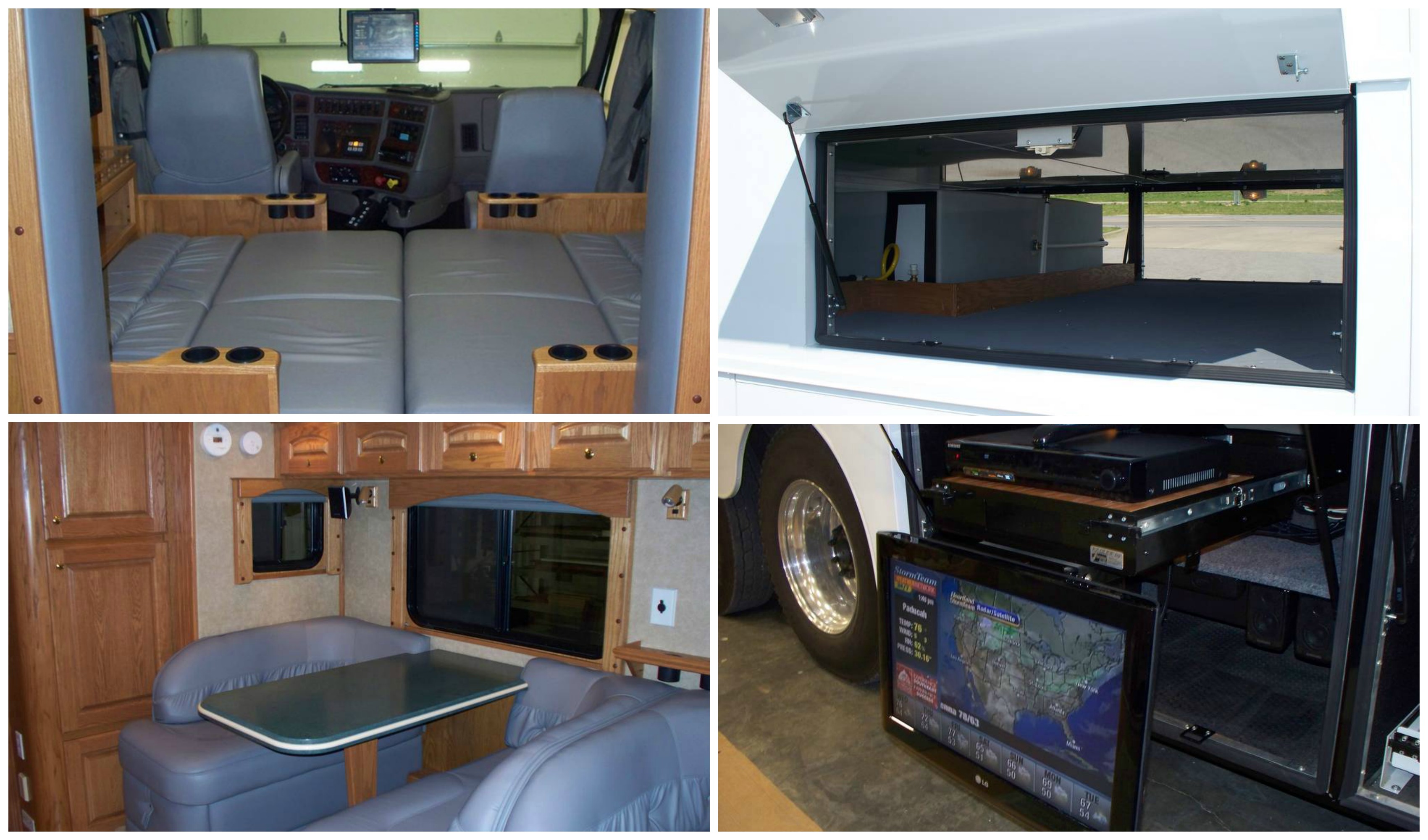
The list of luxury interior details for this motorcoach is too long for me to list in this write up. I’ll give you the idea, and put some photos of Hawk’s work.
The captain’s chairs are Paul’s Seating. It has 2 60 inch sofas that convert into a queen-sized bed. It has a good stereo and entertainment / TV (3 TVs) facility.
It also has color backup cameras, self-levelling system, 200 gallon fresh water tank, 90 gallon heated black and grey tanks, refridgerator with ice maker, glass cook top, 16,000 BTU dual heat furnace, a 40,000 hitch on the rear, an Intellitec 12dvc power management system for batteries, UFH/VHF roof antenna, moving satellite system, and a lot more. They were selling this one (the demo) for $202,500.
Visit Hawk Engineering (click here).
Luxury Motorhome

The interior of this luxury RV unit / horse truck might catch your eye. It stood out among all the RV interiors I’ve seen recently because the interior gives a really spacious, light (like filled with bright light) impression.
The interior is a luxury RV interior, but it’s somehow different. It tends toward an almost “minimalist” design esthetic, but it’s not minimalist — rather, it has all the stuff found in other luxury motorhomes.
The woodwork is all straight, angular lines with high gloss finish that reflect the light from the windows. The color scheme is whites, creams and pale beigey wood colors. I’m not sure if you guys will like this as much as the hearty, homey feel of the dark, rich woods and tones in many of the luxury RVs we feature, but its something new to see.
This one was designed by Guido de Groot in combination with Roelofsen horse trailers.
It’s based on the Volvo FH16 6X2 FES as well as the brand new Renault Master model (the new “Parados” unit is on the Renault).
In addition to being able to accommodate 5 people, it can accommodate 5 horses. You might have seen some of these units where they convert the horse space so that there’s a car garage or more living space. Visit Guido de Groot to see more of his designs (click here).

Argosy with Luxury Interior and 2-Car Vehicle Bay

This custom Freightliner Argosy is something of an oddity, or a rarity, in the way it was conceived, designed and built. The basis of the vehicle is a luxury interior motorhome space combined with a 2-car transport. It’s a transport motorcoach car hauler made from the popular Argosy truck.
The basis is a year 2000 model Freightliner cabover, powered by a 600 horsepower Cummins engine.
Actually, this truck was for sale a while ago and may still be for sale, and it had a listed 38,000 miles on it. It was being sold by its manufacturer, Canepa, although the price wasn’t listed.
As you can see, the interior is a bunch of leather couches and seats, nicely finished bath unit, cleanly carpeted, everything looks neat and clean interior-wise, and there’s a lot of luxury interior -ish features.
The interior space has a set of stairs that leads up into the cab. And, of course, the furthest rear part of the unit is a car bay with enough space for 2 cars.
I didn’t include their photos here, because Canepa’s website didn’t seem to allow photo downloads. Too bad, because I’m sure a lot of you guys would like to see them. We’ll check back on the Canepa site sometime to see if their policy changes and share their work here. If anyone out there has some interior shots of this truck, though, you could send those to us, too. Visit Canepa (click here).
Big Sleeper Tractor Conversion
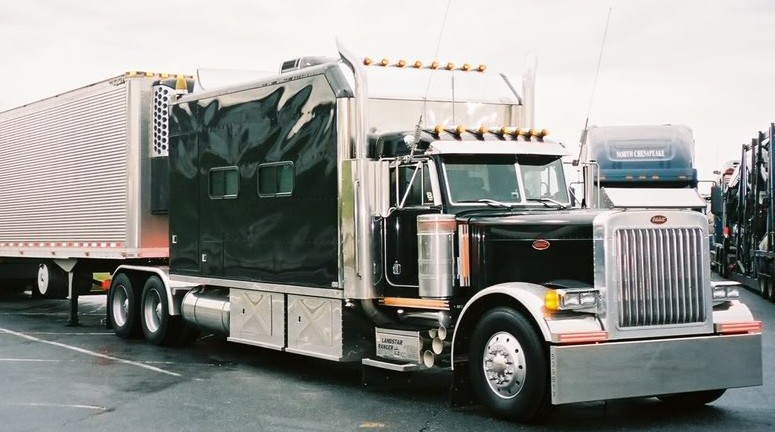
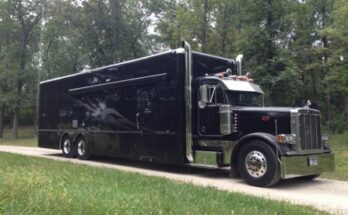
This particular semi unit was posted by a guy who was showing two configurations for his one same truck. It’s an example of how different a semi can look depending on what’s been added to it in the ways of sleeper units, drom boxes, and customization.
The truck itself has a 127 inch long hood, and the sleeper in the one photo is a 70 inch sleeper. It has a long wheelbase and a drom box.
In the photo above, the owner added a sleeper conversion unit to the truck, removing the large drom box. It also doesn’t have a tank underneith the sleeper.
Like the way the drom and sleeper were matched up? Or do you prefer the big bunk look?
The owner posted under the handle umass93UMBC12. Well, if you’re out there reading umass93UMBC12, maybe you’ll send us some interior shots of your rig as well and we can include them in our write up featuring your truck.
Here’s the “after” photo and you can compare the two versions of the truck: