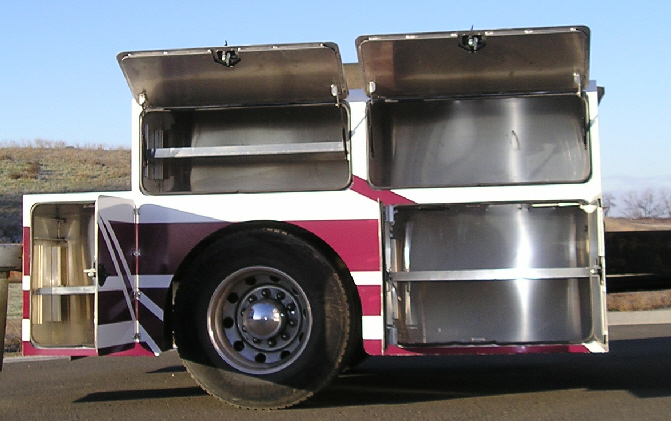
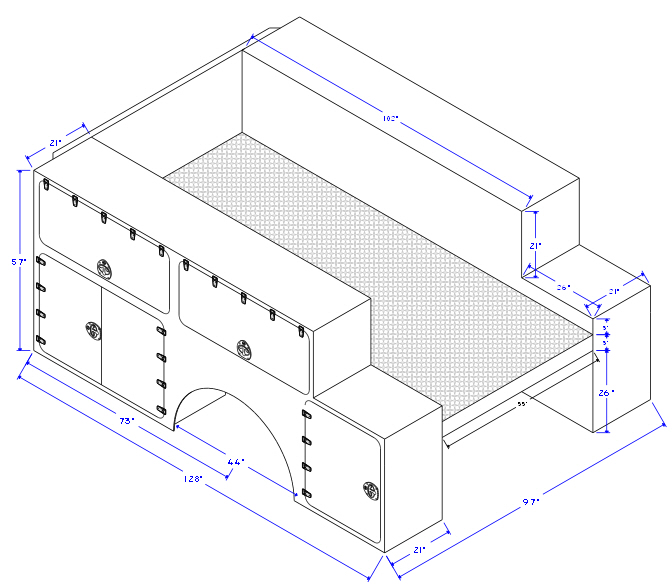
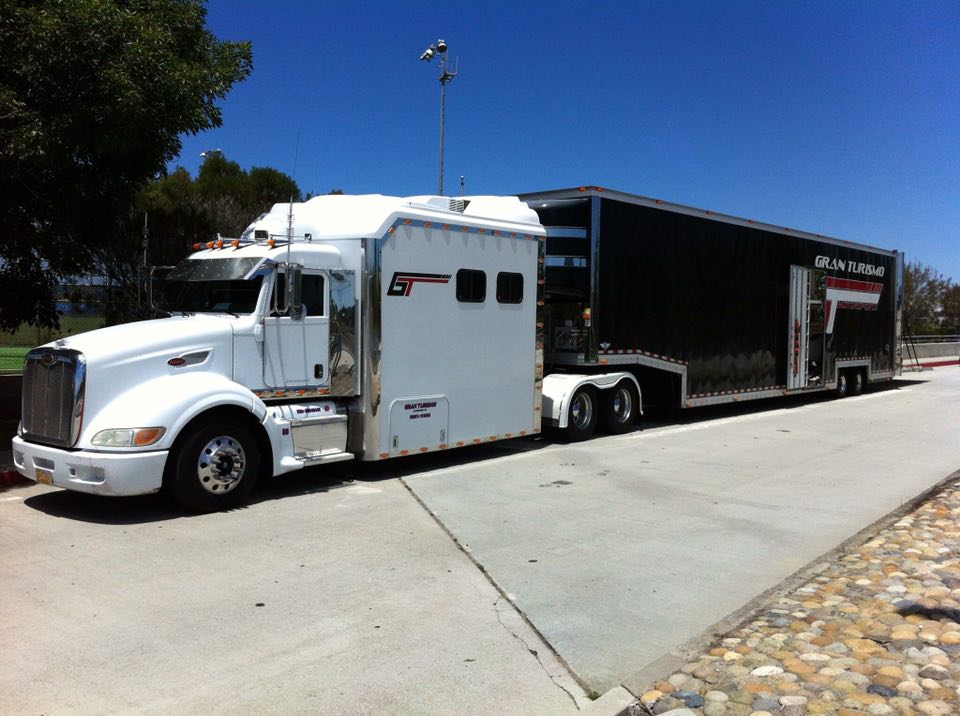
What we have here is a semi truck aluminum camper and car hauler. It’s a bit unusual, but it might be something some Rvers out there would consider, so we thought we’d share it here, even though there isn’t a lot of information on it.
Besides the most important part: The plans and the idea.
Featured music of the day:
To subscribe to this musician, click the red button:
This is something shared by Truck Beds, that Sunnyside, Washington company that operates out of Valley Truck Repair, as far as I can tell from their website.
They have a bunch of storage beds, utility beds, and other modifications you can do to trucks, but this one was a bit unusual.
The bed itself they made with .125″ aluminum (marine grade). The paint job is custom done to match the RV cab.
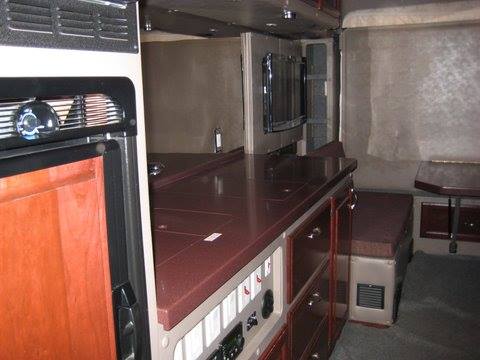
As you can see, it has adjustable shelves and compartments. You can see the custom paint on the outside and aluminum inside.
And you can see how they fit a small sport utility vehicle onto what looks like a lift between the cab and the trailer bed.
Then it looks like the trailer bed is pretty much just like a pick up bed, and they put a camper on it for RVing.
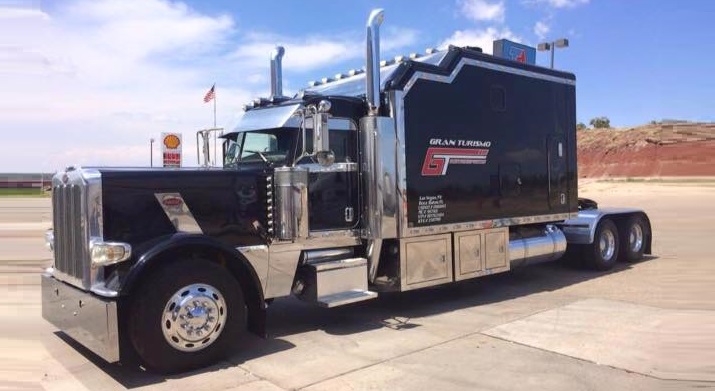
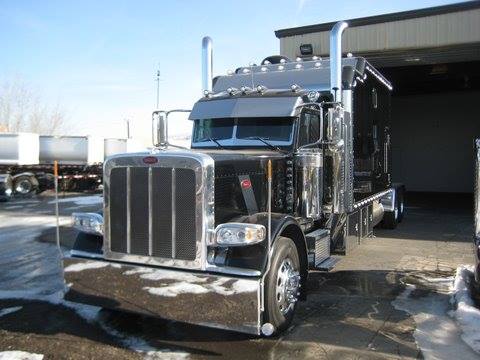
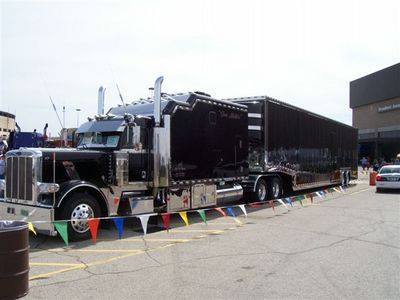
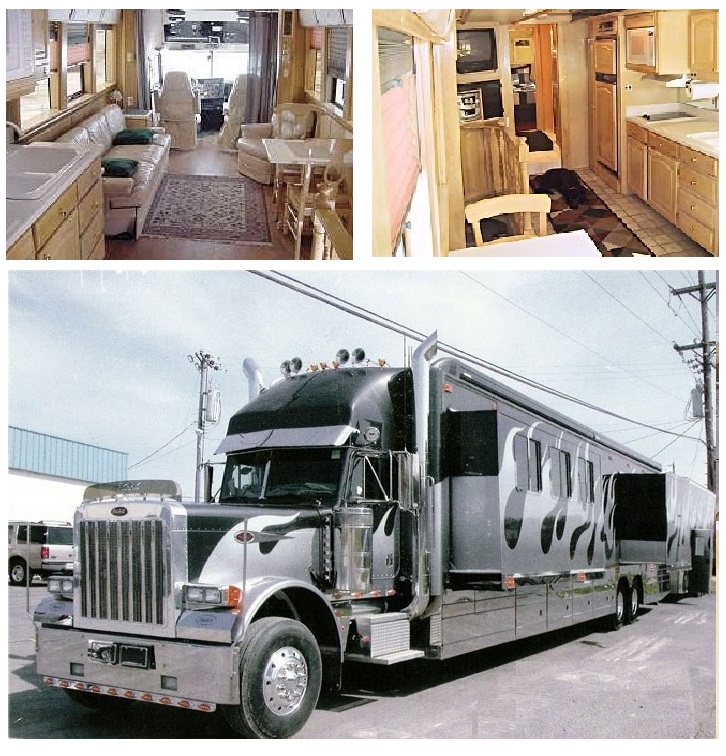
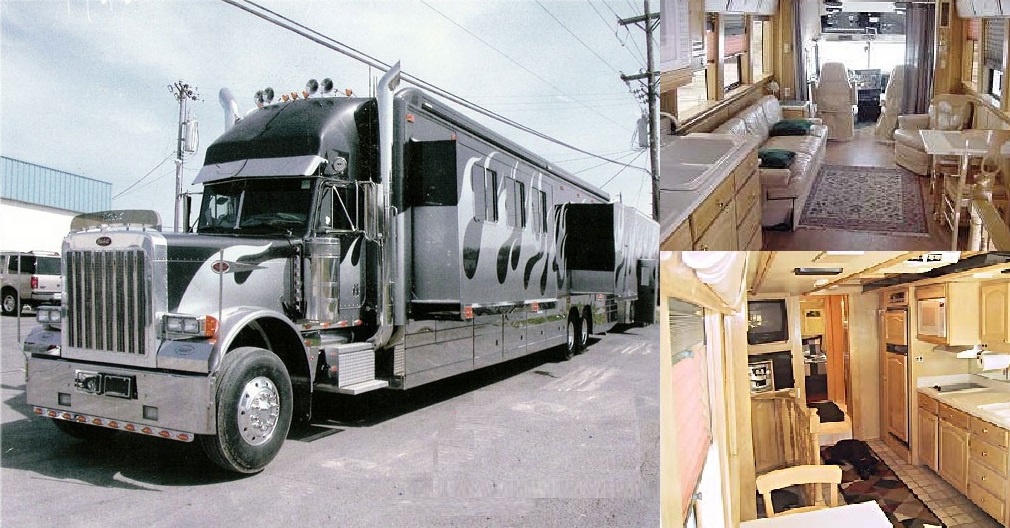
Here’s a big black machine belongs to a member of the Plains, Trains page, Ken Gold. He sent us a bit of info on his semi, as well as some photos of it and its interior, and some more photos of a couple of Ken’s other trucks.
Some specs for this truck:
Name: “BBMF”
2008 Pete 389
550 Cat
18 SpeeD
170 inch ITC Sleeper
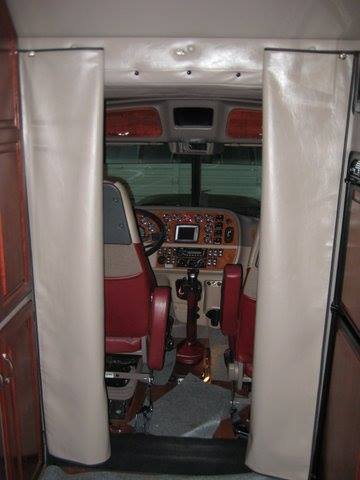
“The interior is charcoal & burgundy in color with a queen size bed, marble floors and granite counter tops as well as a 2000 watt audio & video system.
“BBMF averages approx 120,000 annually hauling Exotic & Classic automobiles around the 48 with a single driver who takes a lot of pride in his ride.
“My philosophy has always been, give a good driver a truck he we be proud of and he will treat is as his own.”
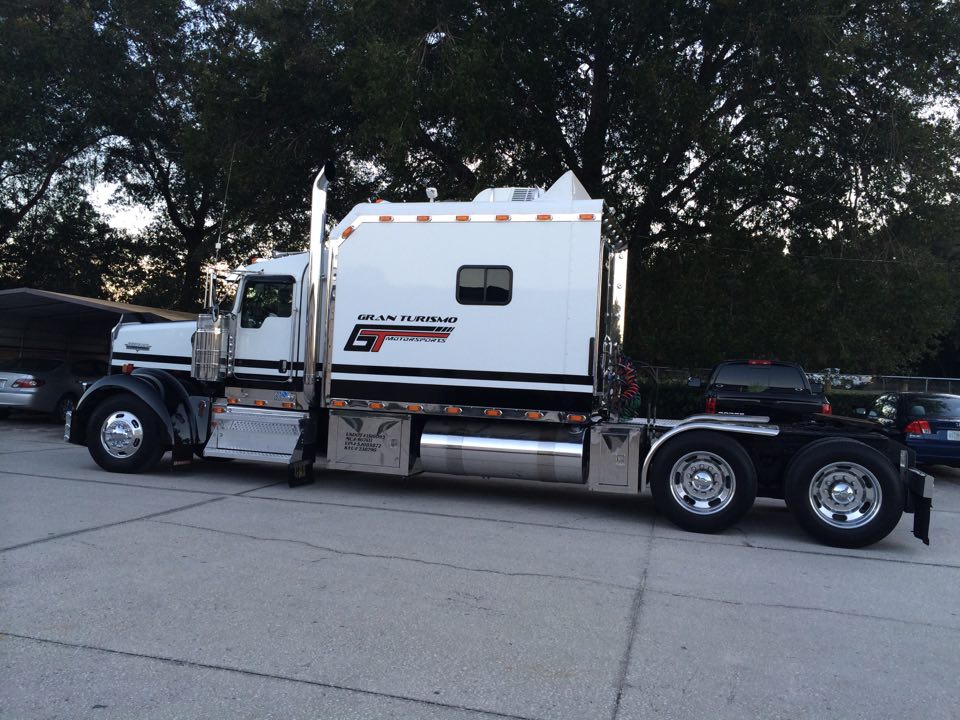
Ken also sent us some pics of his big white counterpart to this giant sleeper bearing semi.
Classic Custom Sleepers
These big sleeper units on cabovers (they used them on conventionals, too, of course) started showing up increasingly in the late 70s and early 80s when Double Eagle Sleepers started making them.
They came in sizes between 30″ sleepers and 84″ “mansion” sleepers. And they came skinny and low-ceiled to big stand-up walk-ins.
The company came out of Shipshewana, Indiana, they built sleepers that aimed for quality — standards that exceeded government regulations for them.
The custom sleepers were made by John Bontrager, Ervin Bontrager, Marvin Bontrager and Ray Miller.
They also offered “standard” sleeper conversions, but that was often just a starting point for the custom sleepers they were asked to build.
They have an aluminum framing structure, heli-arc welded joints, aluminum exterior panels, and fluted rear walls.
The sleeper units all have four or more door to the compartment (2 sleeper doors and 2 for luggage compartment). Longer ones had more, because they had bathrooms and so forth.
They also worked on quality luxury interior finishings, as can be seen in the example photos.
Here are some old pictures from Overdrive Magazine. Visit Overdrive Magazine online (click here).
Kingsley Coach. How About THIS for Your RV?
To see our original write up on this Kingsley coach original, click here. This is a follow up write up, pretty much entirely because we were fortunate on this truck: Jesse L. James filled us in a bit on the history and specifications. Thanks Jesse and everyone else on the Plaines, Trains page who keeps sending us details on all these great vehicles. We’ll keep updating the write ups so you can find out about them. Here’s Jesse:
“Lee Ann Rimes is actually the first to have these custom made for her tour. The rest is history,” Jesse told us. He was good enough to elaborate:
“LeAnn Rimes actually bought the RV from Ralph Dickenson who became Kingsley Coach. It’s powered by a 410 Cummins with a 6 speed Allison transmission. It’s 45 feet long, and they actually ordered three on the initial order. She had them done up beautiful. It’s basically a Peterbilt 379 with a big RV sleeper. Everybody called them Peterbus’s … Price tag then about $300K+.
“The only reason I know this is the wife and I worked in the industry for Stage Call Transportation at the time and had the opportunity to check them out while on tour.”
Jesse was also able the question we had … and it was also asked by people on the Plains, Trains page … about the engine. Is it under the hood or in the back in the engine compartment?:
“It’s under the hood, same as any Pete, only the buses have the engine underneath like the Prevost units. The truck combos do have generators however under or on the sides they use for electricity.”
This truck was sent to us by a member of the Plains, Trains page, Rowdy Farrington. Here’s Rowdy telling you all a bit about it:
“The name of the truck is Udderly Tank’ful.
“Kenworth calls the main color Aztec Gold, and the orange is basic orange. It was ordered with the frame rail painted orange, we had the front fenders painted when it came into the dealership, vinyl coated the tank and air cleaner straps. There had to be orange on it somewhere, because I’m an Oklahoma State Cowboys fan.”
“We haul milk from various commercial dairies in western Kansas throughout the central Midwestern United States.
“My boss bought the truck, I asked for it, I got it…lol pretty straight forward and simple.”
Tanks for letting us know about it, Rowdy!
Classic Custom Sleepers
These big sleeper units on cabovers (they used them on conventionals, too, of course) started showing up increasingly in the late 70s and early 80s when Double Eagle Sleepers started making them.
They came in sizes between 30″ sleepers and 84″ “mansion” sleepers. And they came skinny and low-ceiled to big stand-up walk-ins.
The company came out of Shipshewana, Indiana, they built sleepers that aimed for quality — standards that exceeded government regulations for them.
The custom sleepers were made by John Bontrager, Ervin Bontrager, Marvin Bontrager and Ray Miller.
They also offered “standard” sleeper conversions, but that was often just a starting point for the custom sleepers they were asked to build.
They have an aluminum framing structure, heli-arc welded joints, aluminum exterior panels, and fluted rear walls.
The sleeper units all have four or more door to the compartment (2 sleeper doors and 2 for luggage compartment). Longer ones had more, because they had bathrooms and so forth.
They also worked on quality luxury interior finishings, as can be seen in the example photos.
Here are some old pictures from Overdrive Magazine. Visit Overdrive Magazine online (click here).
Kingsley Coach. How About THIS for Your RV?
To see our original write up on this Kingsley coach original, click here. This is a follow up write up, pretty much entirely because we were fortunate on this truck: Jesse L. James filled us in a bit on the history and specifications. Thanks Jesse and everyone else on the Plaines, Trains page who keeps sending us details on all these great vehicles. We’ll keep updating the write ups so you can find out about them. Here’s Jesse:
“Lee Ann Rimes is actually the first to have these custom made for her tour. The rest is history,” Jesse told us. He was good enough to elaborate:
“LeAnn Rimes actually bought the RV from Ralph Dickenson who became Kingsley Coach. It’s powered by a 410 Cummins with a 6 speed Allison transmission. It’s 45 feet long, and they actually ordered three on the initial order. She had them done up beautiful. It’s basically a Peterbilt 379 with a big RV sleeper. Everybody called them Peterbus’s … Price tag then about $300K+.
“The only reason I know this is the wife and I worked in the industry for Stage Call Transportation at the time and had the opportunity to check them out while on tour.”
Jesse was also able the question we had … and it was also asked by people on the Plains, Trains page … about the engine. Is it under the hood or in the back in the engine compartment?:
“It’s under the hood, same as any Pete, only the buses have the engine underneath like the Prevost units. The truck combos do have generators however under or on the sides they use for electricity.”
How well do you know your filmography when it comes to screen automobiles? This quiz is based on a picture by Calm the Ham, a graphic artist organization that creates compendium-like posters of filmographic objects. Their posters are available to buy, so visit their website if you’re interested in this (link at bottom)
Starting at the top left and moving right:
1. Written by F. Scott Fitzgerald, this novel was made into a film starring Leonardo DiCaprio.
2. Paul Schrader wrote and directed this film; Richard Gere stars as a male escort in the city of Los Angeles.
3. The main characters of this story are bank robbers in the early 1930’s. Faye Dunaway and Warren Beatty star in the 1967 film.
4. This film is the first of four in the series. The story centers around Harrison Ford as he travels around the globe searching for artifacts and rescuing them from the clutches of ‘evil’.
5. Marlon Brando and Al Pacino star in this 1972 crime drama about a fictional crime family who live in New York. It won three academy awards.
6. This musical is set in the 50’s about an American high school couple. The story includes a fight between rival gangs, drag races, as well as, bouffant hairdos.
7. This 1989 film is a comedy drama starring Jessica Tandy, Morgan Freeman, and Dan Aykroyd. It takes place during a period of racial change in the U.S.A..
8. This 1988 film stars Tom Cruise as a selfish guy who is out to make a quick buck. Dustin Hoffman plays his brother who inherits their father’s fortune upon his death.
9. This was the first car to be toured under this superhero’s name. TV, comic books, animated features, and films depict various versions of his exploits in the big bad city.
10. The most fearsome car ever to appear in film. Directed by John Carpenter, this story is based on a novel by one of the most famous writers in our time.
11. This comedy starring Dan Aykroyd, Harold Ramis, Bill Murray, Sigourney Weaver, Ernie Hudson, and Rick Moranis takes place in New York City in the 1980’s. Who you gonna call?
12. A must see teen movie for people of all ages. This 1986 film is a comedy about a teen, his girlfriend, and his best friend who all skip school and spend their day in the city of Chicago.
13. This action comedy film series consists of three movies starring Mike Myers as a spy for the British government, as well as, the hero’s evil nemesis.
14. This 1968 Disney movie centers around a race car and his owner, played by Dean Jones. Buddy Hackett’s character names the car after his uncle, who was a boxer.
15. Al Pacino stars in this 1983 crime drama, written by Oliver Stone, is about a Cuban who becomes a major drug kingpin in Florida.
16. This famous van can be seen in comic books, in animated films, in a TV series, and on the big screen. The 2002 film stars Sarah Michelle Gellar, Freddie Prinze, Jr., Linda Cardellini, and Matthew Lillard.
17. This 1992 comedy stars Joe Pesci, Mitchell Whitfield, Ralph Macchio, and Marisa Tomei. The story revolves around a murder trial with Joe Pesci playing a lawyer for his innocent cousin and his friend.
18. Ian Fleming wrote a series of novels from which many movies have been made. This particular film stars Sean Connery as a spy, with supporting cast members: Shirley Eaton, Honor Blackman, and Gert Frobe.
Answers: 1. The Great Gatsby, 2. American Gigolo, 3. Bonny and Clyde, 4. Raiders of the Lost Ark, 5. The Godfather, 6. Grease, 7. Driving Miss Daisy, 8. Rain Man, 9. Batman, 10. Christine, 11. Ghostbusters, 12. Ferris Bueller’s Day Off, 13. Austin Powers, 14. Herbie Movies, 15. Scarface, 16. Scooby Doo, 17. My Cousin Vinny, 18. Goldfinger
Calm the Ham is available at this link (click here)
These big sleeper units on cabovers (they used them on conventionals, too, of course) started showing up increasingly in the late 70s and early 80s when Double Eagle Sleepers started making them.
They came in sizes between 30″ sleepers and 84″ “mansion” sleepers. And they came skinny and low-ceiled to big stand-up walk-ins.
The company came out of Shipshewana, Indiana, they built sleepers that aimed for quality — standards that exceeded government regulations for them.
The custom sleepers were made by John Bontrager, Ervin Bontrager, Marvin Bontrager and Ray Miller.
They also offered “standard” sleeper conversions, but that was often just a starting point for the custom sleepers they were asked to build.
They have an aluminum framing structure, heli-arc welded joints, aluminum exterior panels, and fluted rear walls.
The sleeper units all have four or more door to the compartment (2 sleeper doors and 2 for luggage compartment). Longer ones had more, because they had bathrooms and so forth.
They also worked on quality luxury interior finishings, as can be seen in the example photos.
Here are some old pictures from Overdrive Magazine. Visit Overdrive Magazine online (click here).
To see our original write up on this Kingsley coach original, click here. This is a follow up write up, pretty much entirely because we were fortunate on this truck: Jesse L. James filled us in a bit on the history and specifications. Thanks Jesse and everyone else on the Plaines, Trains page who keeps sending us details on all these great vehicles. We’ll keep updating the write ups so you can find out about them. Here’s Jesse:
“Lee Ann Rimes is actually the first to have these custom made for her tour. The rest is history,” Jesse told us. He was good enough to elaborate:
“LeAnn Rimes actually bought the RV from Ralph Dickenson who became Kingsley Coach. It’s powered by a 410 Cummins with a 6 speed Allison transmission. It’s 45 feet long, and they actually ordered three on the initial order. She had them done up beautiful. It’s basically a Peterbilt 379 with a big RV sleeper. Everybody called them Peterbus’s … Price tag then about $300K+.
“The only reason I know this is the wife and I worked in the industry for Stage Call Transportation at the time and had the opportunity to check them out while on tour.”
Jesse was also able the question we had … and it was also asked by people on the Plains, Trains page … about the engine. Is it under the hood or in the back in the engine compartment?:
“It’s under the hood, same as any Pete, only the buses have the engine underneath like the Prevost units. The truck combos do have generators however under or on the sides they use for electricity.”
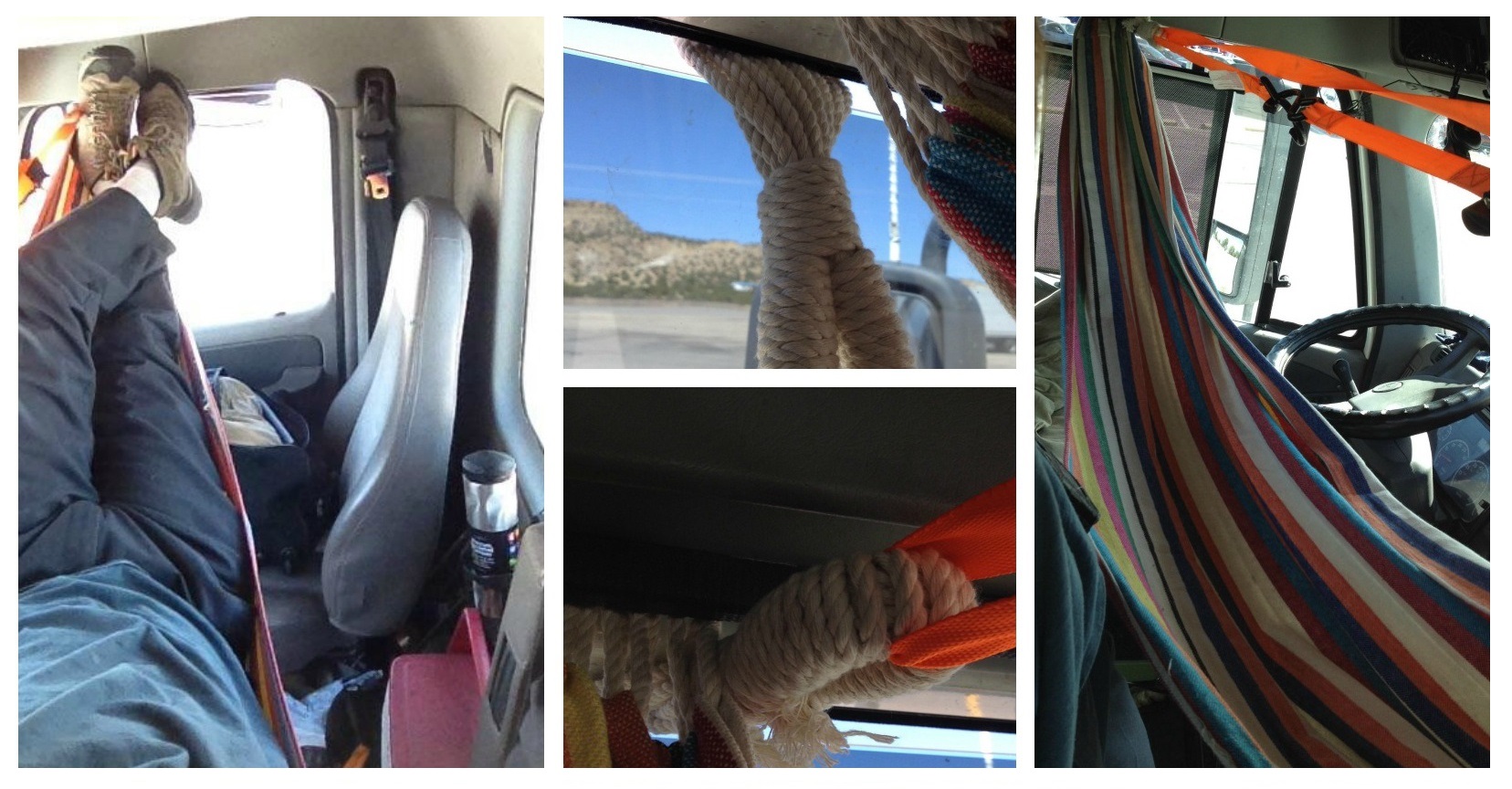
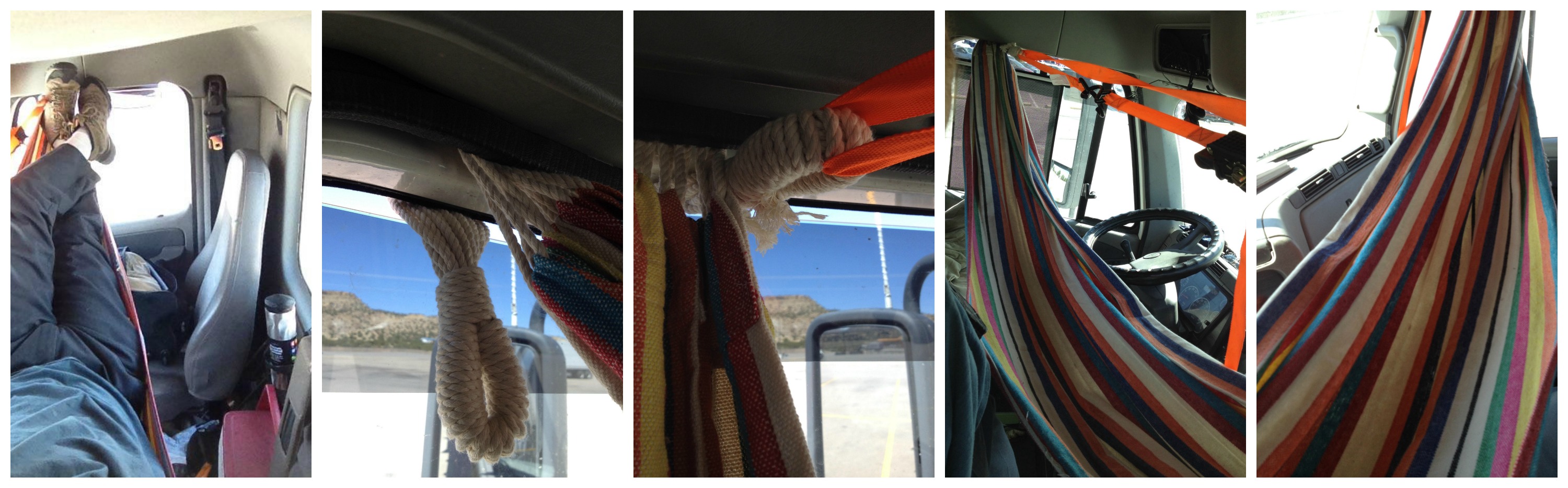
This is what a hazmat driver figured out for himself in order to put is feet up in his cab … not a sleeper cab, obviously. He built a trucker hammock and shared it on Imgur.
The trucker’s handle online is floydguitarist and the pictures show what’s involved.
To build one, you need a hammock and a high-weight rated ratchet straps. You put the cord ends of the hammock through the truck’s window on each side of the cab and loop it back over tops of the doors, closing the doors on it (or over the door and loop it back in — either way), then ratchet the two ends together.
In this case, the ratchet strap was rated for 400 pounds, according to floydguitarist, and the hammock itself was rated for 250 pounds.
So, although some people were worried about the strength of the ratchet, but the trucker said he was more concerned about bending the doors of his truck.
In any case, he said he used it a couple of times and he weighs 175.
This composite image shows everything you need to know. You’ve probably figured it out anyway by now. (View the image on a large screen for best viewing)
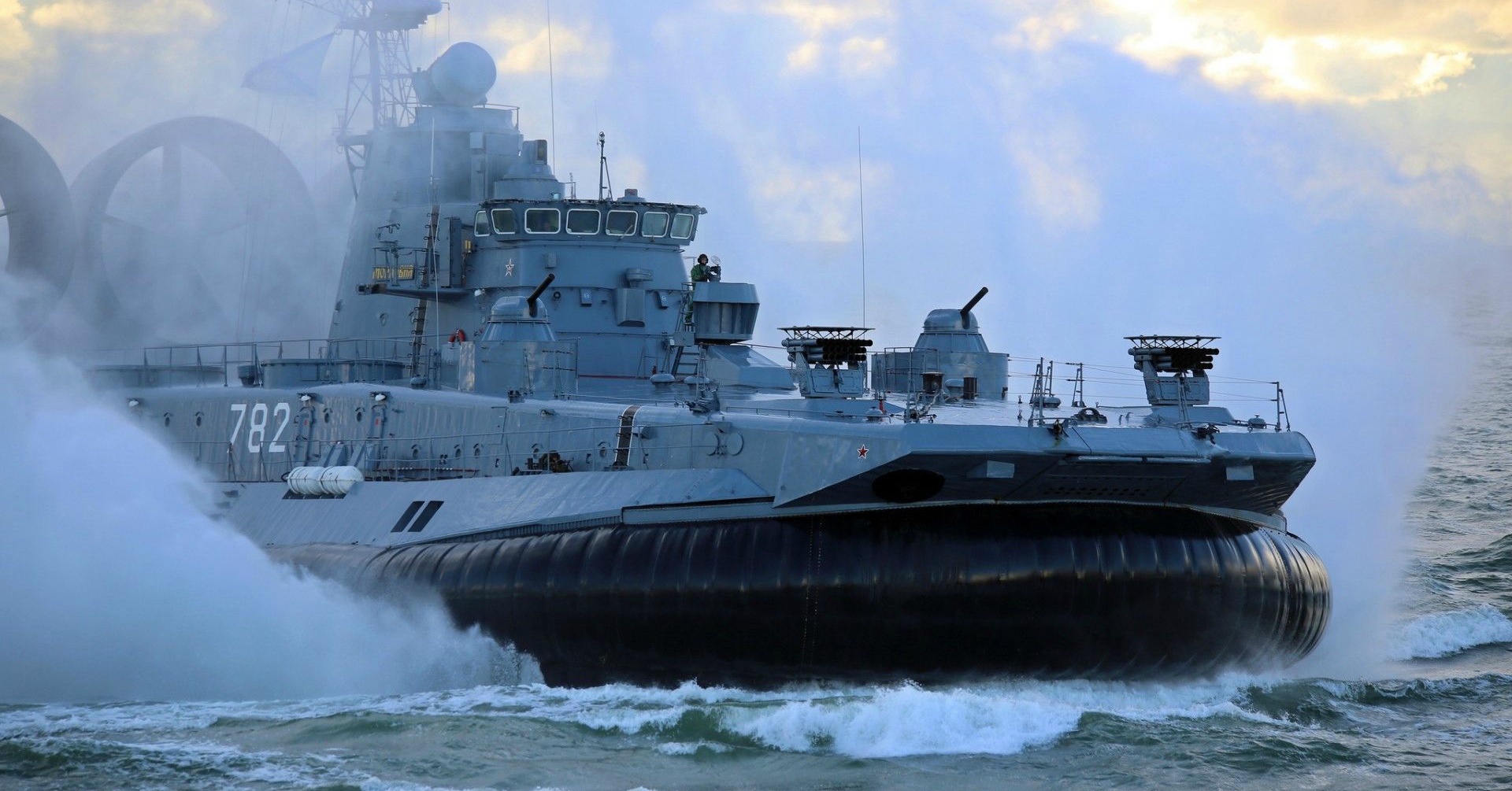
We may have had a contentious relationship with Russia over the past century — although I won’t go into politics here — but those guys can build big metal vehicles.
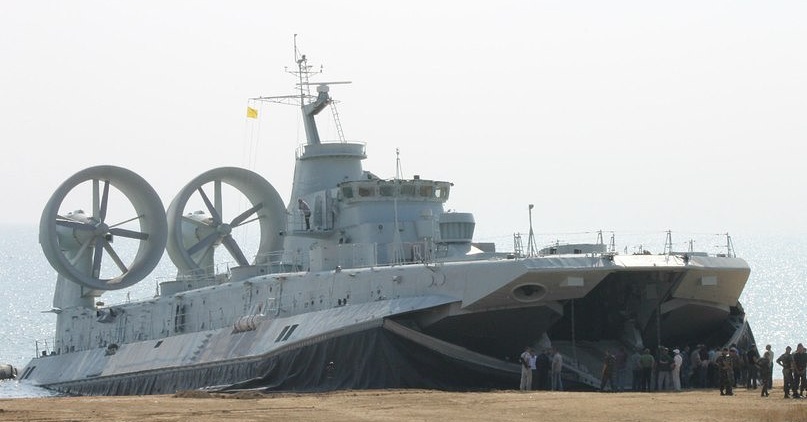
The hovercraft that can lift the most weight is also one of theirs. It’s the one pictured, a Zubr-class LCAC, also called “Pomornik”. It’s a military hovercraft, it has a standard full load displacement of 555 tons, and it can carry 130 tons of cargo.
If they want to carry military supplies instead of cargo, they can transport 145 fully equipped troops with 10 armored vehicles on one of these hovercraft, or 500 troops, or 3 T-80 main battle tanks, or 8 amphibious tanks.
The cargo area is 400 square meters (4,300 square feet). It has a fuel capacity of 56 tons.
Technologically, the strength and buoyancy of these craft are provided by a rectagular pontoon, which is the main load-carrying part of the hull, and superstructure sits on top of that pontoon, split into 3 compartments.
Russia has 2 of these in service. Ukraine also has one (had? Not sure if it was at the naval base in Crimea). The Greek navy (called the Hellenic Navy) also has 4, although 2 are in a state of “long term inactivity”.
China has commissioned 4 as well, from Ukraine. They were going to build 2 updated versions at Crimea (which used to be soverign Ukrainian territory until 2 years ago). Not sure what the status of this deal is currently.
These things are heavy already, because they’re built for military situations. For example, they have airtight sealed compartmets to protect crew from weapons of mass destruction, magnetic mine-protecting magnetic field generating systems, and an allow armor strengthened command post.
 " >
" >