American poet Robert Frost spoke often about poetry itself. In his piece “On Emerson” he refers to “a poem I have called the best Western poem yet [Emerson] says:
‘Unit and universe are round.’
Featured music of the day:
To subscribe to this musician, click the red button:
Frost was talking about Emerson’s possibly being, in Frost’s words, “too Platonic about evil.”
This is the Emerson poem:
Uriel
It fell in the ancient periods
Which the brooding soul surveys,
Or ever the wild Time coined itself
Into calendar months and days.
This was the lapse of Uriel,
Which in Paradise befell.
Once, among the Pleiads walking,
Seyd overheard the young gods talking;
And the treason, too long pent,
To his ears was evident.
The young deities discussed
Laws of form, and meter just,
Orb, quintessence, and sunbeams,
What subsisteth, and what seems.
One, with low tones that decide,
And doubt and reverend use defied,
With a look that solved the sphere,
And stirred the devils everywhere,
Gave his sentiment divine
Against the being of a line.
“Line in nature is not found;
Unit and universe are round;
In vain produced, all rays return;
Evil will bless, and ice will burn.”
As Uriel spoke with piercing eye,
A shudder ran around the sky;
The stern old war-gods shook their heads,
The seraphs frowned from myrtle-beds;
Seemed to the holy festival
The rash word boded ill to all;
The balance-beam of Fate was bent;
The bounds of good and ill were rent;
Strong Hades could not keep his own,
But all slid to confusion.
A sad self-knowledge, withering, fell
On the beauty of Uriel;
In heaven once eminent, the god
Withdrew, that hour, into his cloud;
Whether doomed to long gyration
In the sea of generation,
Or by knowledge grown too bright
To hit the nerve of feebler sight.
Straightway, a forgetting wind
Stole over the celestial kind,
And their lips the secret kept,
If in ashes the fire-seed slept.
But now and then, truth-speaking things
Shamed the angels’ veiling wings;
And, shrilling from the solar course,
Or from fruit of chemic force,
Procession of a soul in matter,
Or the speeding change of water,
Or out of the good of evil born,
Came Uriel’s voice of cherub scorn,
And a blush tinged the upper sky,
And the gods shook, they knew not why.
The Harry Ransom Center at the University of Texas in Austin unveiled a new endeavor titled Project REVEAL, at the end of June. The project allows users around the world to view over 22,000 images from the museum and research library’s collection. The images encompass original manuscripts, handwritten notes, drafts and sketches by noteworthy English and American literary contributors including Joseph Conrad, Henry David Thoreau and Oscar Wilde.
Stemming from more open access policies recently adopted by the Harry Ransom Center, the project marks an interesting departure from the frequently restricted nature of high academic research materials. In an article published June 29th, 2015 on the Harry Ransom Center website, affiliates of the collection stated that the common access is intended to promote research and “creative re-use” of the items.
With copyright issues the subject of continuous debate in the art world, it will be interesting to see if this “creative re-use” will result in examples of appropriation art, and whether that will encourage other archival collections to adopt similar rules. Appropriation art experienced a recent spike in attention when high-profile British artist Richard Prince was embroiled in a controversy following his use of Instagram photos originally posted by the Suicide Girls. In an interesting turn, the victims of the plagiaristic art practice retaliated not by suing, but by selling their virtually identical “artworks” at a fraction of the price of Prince’s works.
Perhaps Project REVEAL’s aim is reflected in the actions of the Instagram posters. By opening access to all users, collections waive their right to police how the collections are used – and yet, depending on who you ask, this could create a growing space for conversation on the ownership and authorship of art.
In 1848, Edgar Allen Poe published his final work, “Eureka,” which answered a cosmic riddle of his time: Why is the nighttime sky dark if there are an infinite number of stars in the sky? He theorized that the darkness represented stars too young for the light to have yet reached us, but he was wrong!
It’s actually the opposite, something called Olber’s Paradox. The reason, according to scientists, that the night sky is not filled with lights is that the stars are TOO OLD and their light has been redshifted out of the visible spectrum. It has to do with the metric expansion of space.
It would have been very hard to guess at this, however, for Poe, because he was guessing before the work of Edwin Hubble was completed. Relativity was not considered.
How to Fly: A Man Flew Flights Worth $21 MILLION on an Unlimited Flying Pass
In 1987, a guy bought a lifetime unlimited first class American Airlines ticket for $250,000. He flew over 10,000 flights costing the company $21,000,000. They terminated his ticket in 2008.
The man was one Steve Rothstein. It was a ticket supposed to be for unlimited lifetime travel.
Rothstein flew over 10,000 flights with the pass, for over 10 MILLION miles.
An interesting thing you might not think of doing right away, if you decide to buy a pass (although they’re not offered anymore). Rothstein flew strangers home.
That’s because he bought a second Companion Ticket for $150,000.
Rothstein’s ticket was taken back in 2008 when American Airlines accused the man of fraud, reportedly.
How Painter Salvador Dali Used To Get Out of Paying Restaurant Bills!
There are some interesting economics questions out there that go beyond the lessons of basic theory. What are the dynamics of economics where people get paid, yet no one pays?
Well, that’s not exactly it I guess. In this case (and if this story is true and actually true of Dali, and not Picasso or another artist — the story is connected to Dali the way it has been told recently) the surrealist painter used to pay with cheques at restaurants, but would draw on the backs of the checks, and who would cash a check with a Dali on the back?
Would you?
Wait a second though. Do restaurants accept personal cheques? Do they accept them in Spain or in the old days when Dali would have been dining?
In 1987, a guy bought a lifetime unlimited first class American Airlines ticket for $250,000. He flew over 10,000 flights costing the company $21,000,000. They terminated his ticket in 2008.
The man was one Steve Rothstein. It was a ticket supposed to be for unlimited lifetime travel.
Rothstein flew over 10,000 flights with the pass, for over 10 MILLION miles.
An interesting thing you might not think of doing right away, if you decide to buy a pass (although they’re not offered anymore). Rothstein flew strangers home.
That’s because he bought a second Companion Ticket for $150,000.
Rothstein’s ticket was taken back in 2008 when American Airlines accused the man of fraud, reportedly.
Why Is It So Easy To Remember The Symbol for Sodium if You Know Chinese (Na)?
Hint: 钠钠钠钠钠钠钠钠钠钠钠钠钠钠钠钠 BATMAN!
Did you count the symbols?
Yes, the pronunciation of the element Sodium sounds like “na” in Chinese.
Guess what Lithium is in Chinese? “Li.”
Not only that, in Swedish and Dutch it’s “Natrium.”
Anyone know anymore Chinese or other interesting coincidences? In the meantime, Sodium Sodium Sodium Sodium, Sodium Sodium Sodium Sodium, Hey Hey Hey, Goodbye…. But really, keep reading one of the posts below on the blog.
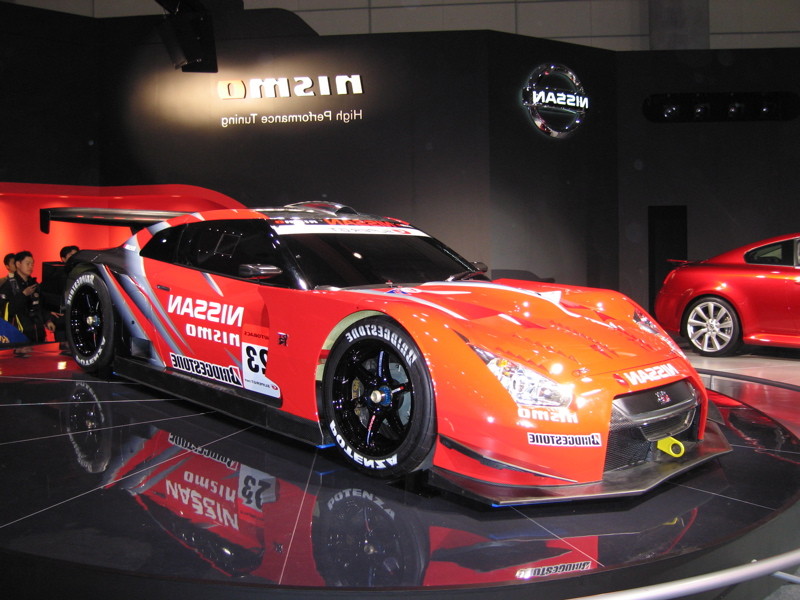
Why Nissan Race Cars Use #23... Japanese Speakers, Can You Tell?
All those Japanese speakers out there, can you guess?
And for everyone who wants to learn a little of the Asian language said to be the second-hardest language to write (next to Chinese, which has 10,000 Kanji [characters that represent a concept each, as opposed to an alphabet which represents sounds] rather than 2,000 in daily use) for native English speakers. By the way, Japanese is ranked more difficult than Chinese for speaking, if I remember correctly.
In motorsports, Japanese car manufacturer Nissan uses #23.
It’s a bit of a good match.
It’s wordplay: In Japanese, 2 is pronounced “ni” and 3 is pronounced “san.” Although 23 is not pronounced “ni-san,” you can still see the fun of the use of 23, probably.
Pictured: Nissan GT-R for the SUPER GT series (GT500 class)
Anyone curious about Nissan’s spelling? It’s 日産
The Japanese Kanji word if translated means “Daily Production” or “Japanese Production” since the word Ni has can mean both Day or Japan.
According to Wikipedia, in 1928, Yoshisuke Aikawa founded the holding company Nippon Sangyo (Japan Industries or Nippon Industries). “Then name ‘Nissan’ originated during the 1930s as an abbreviation” used on the Tokyo stock market for Nippon Sangyo. This company was the famous Nissan “Zaibatsu” (company combine) which included Tobata Casting and Hitachi. At this time Nissan controlled foundries and auto parts businesses, but Aikawa did not enter automobile manufacturing until 1933.
There are some interesting economics questions out there that go beyond the lessons of basic theory. What are the dynamics of economics where people get paid, yet no one pays?
Well, that’s not exactly it I guess. In this case (and if this story is true and actually true of Dali, and not Picasso or another artist — the story is connected to Dali the way it has been told recently) the surrealist painter used to pay with cheques at restaurants, but would draw on the backs of the checks, and who would cash a check with a Dali on the back?
Would you?
Wait a second though. Do restaurants accept personal cheques? Do they accept them in Spain or in the old days when Dali would have been dining?
Why Is It So Easy To Remember The Symbol for Sodium if You Know Chinese (Na)?
Hint: 钠钠钠钠钠钠钠钠钠钠钠钠钠钠钠钠 BATMAN!
Did you count the symbols?
Yes, the pronunciation of the element Sodium sounds like “na” in Chinese.
Guess what Lithium is in Chinese? “Li.”
Not only that, in Swedish and Dutch it’s “Natrium.”
Anyone know anymore Chinese or other interesting coincidences? In the meantime, Sodium Sodium Sodium Sodium, Sodium Sodium Sodium Sodium, Hey Hey Hey, Goodbye…. But really, keep reading one of the posts below on the blog.
Why Nissan Race Cars Use #23... Japanese Speakers, Can You Tell?
All those Japanese speakers out there, can you guess?
And for everyone who wants to learn a little of the Asian language said to be the second-hardest language to write (next to Chinese, which has 10,000 Kanji [characters that represent a concept each, as opposed to an alphabet which represents sounds] rather than 2,000 in daily use) for native English speakers. By the way, Japanese is ranked more difficult than Chinese for speaking, if I remember correctly.
In motorsports, Japanese car manufacturer Nissan uses #23.
It’s a bit of a good match.
It’s wordplay: In Japanese, 2 is pronounced “ni” and 3 is pronounced “san.” Although 23 is not pronounced “ni-san,” you can still see the fun of the use of 23, probably.
Pictured: Nissan GT-R for the SUPER GT series (GT500 class)
Anyone curious about Nissan’s spelling? It’s 日産
The Japanese Kanji word if translated means “Daily Production” or “Japanese Production” since the word Ni has can mean both Day or Japan.
According to Wikipedia, in 1928, Yoshisuke Aikawa founded the holding company Nippon Sangyo (Japan Industries or Nippon Industries). “Then name ‘Nissan’ originated during the 1930s as an abbreviation” used on the Tokyo stock market for Nippon Sangyo. This company was the famous Nissan “Zaibatsu” (company combine) which included Tobata Casting and Hitachi. At this time Nissan controlled foundries and auto parts businesses, but Aikawa did not enter automobile manufacturing until 1933.
Yes, the pronunciation of the element Sodium sounds like “na” in Chinese.
Guess what Lithium is in Chinese? “Li.”
Not only that, in Swedish and Dutch it’s “Natrium.”
Anyone know anymore Chinese or other interesting coincidences? In the meantime, Sodium Sodium Sodium Sodium, Sodium Sodium Sodium Sodium, Hey Hey Hey, Goodbye…. But really, keep reading one of the posts below on the blog.
Sustainable Living? This Urban Homestead Produces 6,000lbs of Food Every Year!
Everyone loves the concept of being self-sufficient and being able to cultivate and grow one’s food. However, it is not that simple and easy to have a self-sustaining lifestyle, especially when there are instant and processed foods in every corner of the city. But an inspiring way of living that the Dervaes family is showing to people makes it interesting for others. At present, the family of four yields around 6,000lbs (approximately 2,720kg) of organic food a year on their 1/10 acre plot.
Their house is in Pasadena, California and it is a sweet dwelling for their three kids and all their cultivated vegetable and fruits plus their animals. Finding land for sustainable living can certainly be a challenge, but this family has managed just that. It even gets better.
They are able to save a big amount of money with their lifestyle and they get extra income from selling their crops to restaurants. That’s about $20,000 annually!
These 6,000 pounds of produced foods on only 1/10-acre of land every year, it’s undeniable that they are an incredible family!
The family is able to grow around four hundred types of fruits, berries, vegetables, and even herbs. This vegetarian family also takes good care of ducks, hens, small goats and little rabbits for eggs, dairy milk and compost.
This urban farmhouse does not just dwell merely on foods; they also do their best to conserve energy by making use of solar panels. Using solar panels is one way in which you can be energy savvy, and try to keep bills to a minimum. If purchasing solar panels is unattainable for you then you might like to try other ways to save money. These include trying out an energy comparison site to see if you could be better off elsewhere. The family does not have to worry about high energy consumption and they only spend around $12 for the whole year! And how about spending on gas? Deaves family brew theirs! They use biodiesel from used oil from restaurants. They use a processor that will turn used vegetable oil into biodiesel gas!
How all these things started?
In mid-1980’s, Jules Dervaes purchased a house and lot in Northwest Pasadena needed a lot of restoration. He was really desperate to live a simple country lifestyle that made him decide to start with growing their own vegatables. This did not make them satisfied so they thought to become more self-reliant and be able to create less impact to the environment.
Growing and Preserving Food
Hence, they grow their own food and also started to preserve food. Making their own bread, butter, cheese and yogurt also made them more self-sustaining.
Water Conservation
And for water conservation, they use low-flush toilets. If this is something you are not familiar with, it might be in your best interest to look at a site like https://toiletreviewer.com/best-dual-flush-toilets/. At least this way, you can understand how saving money through an everyday item like a toilet could make all the difference. You can also look into solar-powered shower, as they also reuse water. For conserve moisture for their plants, they make use of mulch and they use clay pot for plant irrigation. Imagine, this system made them conserve at least 50% of water!
Energy Conservation
The family uses energy-efficient appliances and for their lighting, they have olive oil lamps and home-produced beeswax candles. They also opted to have manual appliances such as toaster, blender, and a pedal-powered grinder. They are able to save big on their gas because they make use of brewed biodiesel. And if they can, they also use a bike or just commute.
Simple Living
With this modest country way of living, they are really mindful of whatever they consume, hence, they have learnt to reuse and recycle, spot for pre-loved items instead purchasing new ones and if possible they also use. Their cleansers, roll-ons, toothpastes and all other cleaning goods are all home-produced and made out of natural substances which makes them nontoxic. For their medicines, they make use of herbs, for their hair, they know how cut theirs and whatever DIY that they can do, they use it!
Aside from just living this life themselves, the family loves to teach people that urban homestead is sustainable. They are making a recording of their means and practices online for at least a decade now to show to people how they start this way of living. They have an updated blog, they also arrange events and even workshops for others to learn basic skills on how to have sustainable homestead.
It is really a fantastic and remarkable lifestyle. The Urban Homestead tells us that it is not just a fanciful model – it is actually a very manageable way of living even if you are in a very busy and highly modern city. You can start a few steps at a time.
10 Things I Wish I Knew Before Full Time RVing Across the Country
Almost all youngsters like those who are in their 20’s don’t have that much know-how about RVing.
Here are great information that you need to know before hitting the road!
You can settle with medium-sized Rig, big ones are not advisable.
Some people think of getting a big one like a truck camper and it seems to be an economical scheme. But it would be difficult to go around the city with a big vehicle.
Keep only necessary stuff with you.
It’s really stressful to store a lot of stuff that isn’t really necessary. It’s annoying to see a lot of clutter inside your cabinets, and some might be hanging on the floor as you have filled all cupboards and cabinets with various stuff that isn’t really necessary. Pack only what’s useful and enjoy a simple, clutter-free space.
Learning how to clean your RV will create a good setting for you.
Unwept flooring boards, dishes with piled sink, stinky bathroom tiles will make you stressed the whole day. Being able to organize your time and learning on how to make it orderly and clean is a must. It’s after all your little space and cleaning the whole area makes a great difference.
Don’t always rely on what Google Maps tells you. If it says it is just three hours and forty-five minutes away, then must be five hours.
Bear in mind that driving a n RV is really cannot be compared with driving a car. You can’t veer off through traffic and it will take time to get from one point to another point.
It’s a fact that there will be time that you need to have it repaired as one part of it can be broken.
No one can claim that an RV is perfect. Light bulbs have to be replaced and the sockets have to be inspected by an electrician. The kitchen sink might be leaking or the countertop tiles need to be replaced or all other things that may break as materials wear out.
Make time your best friend.
Time becomes your friend when you make time for everything. This is for RVing and it also applies to our life. Exploring things are you hit the road is an awesome adventure that you must not miss. Enjoy scenic lunch breaks and have a time of your life.
If there are RV reward points and discount programs, grab it!
Be aware of reward points and discount programs that companies offer. It will pay off and you’ll be glad that you are getting sliced prices even if it’s just 10-15%.
Stay alert with Walmarts policy.
You’ll be disappointed if you will be greeted with a policy that says ‘NO overnight staying please’. Those who RVed before would advise you to just make Wal-Mart your parking lot and you’ll be able to stay overnight!
But to be safe and sure, seek the manager’s consent if night camping is allowed.
If you love Mexican Food, take not that aren’t around in many places.
Pack a lot of salsa and nachos for your enjoyable snacks. You might be disappointed while hitting the road and you’re so hungry but there are no Mexican Foods around the town.
It must be true that the people who are in RV Park are the people you can really rely on.
You can seek help on how to replace the hose from them and every time you need them, call for their help.
The ten great points must be some of things you should know before starting a full time RVing.
All those Japanese speakers out there, can you guess?
And for everyone who wants to learn a little of the Asian language said to be the second-hardest language to write (next to Chinese, which has 10,000 Kanji [characters that represent a concept each, as opposed to an alphabet which represents sounds] rather than 2,000 in daily use) for native English speakers. By the way, Japanese is ranked more difficult than Chinese for speaking, if I remember correctly.
In motorsports, Japanese car manufacturer Nissan uses #23.
It’s a bit of a good match.
It’s wordplay: In Japanese, 2 is pronounced “ni” and 3 is pronounced “san.” Although 23 is not pronounced “ni-san,” you can still see the fun of the use of 23, probably.
Pictured: Nissan GT-R for the SUPER GT series (GT500 class)
Anyone curious about Nissan’s spelling? It’s 日産
The Japanese Kanji word if translated means “Daily Production” or “Japanese Production” since the word Ni has can mean both Day or Japan.
According to Wikipedia, in 1928, Yoshisuke Aikawa founded the holding company Nippon Sangyo (Japan Industries or Nippon Industries). “Then name ‘Nissan’ originated during the 1930s as an abbreviation” used on the Tokyo stock market for Nippon Sangyo. This company was the famous Nissan “Zaibatsu” (company combine) which included Tobata Casting and Hitachi. At this time Nissan controlled foundries and auto parts businesses, but Aikawa did not enter automobile manufacturing until 1933.
 " >
" >