This Teardrop Camper Wrapped In Bird Photography
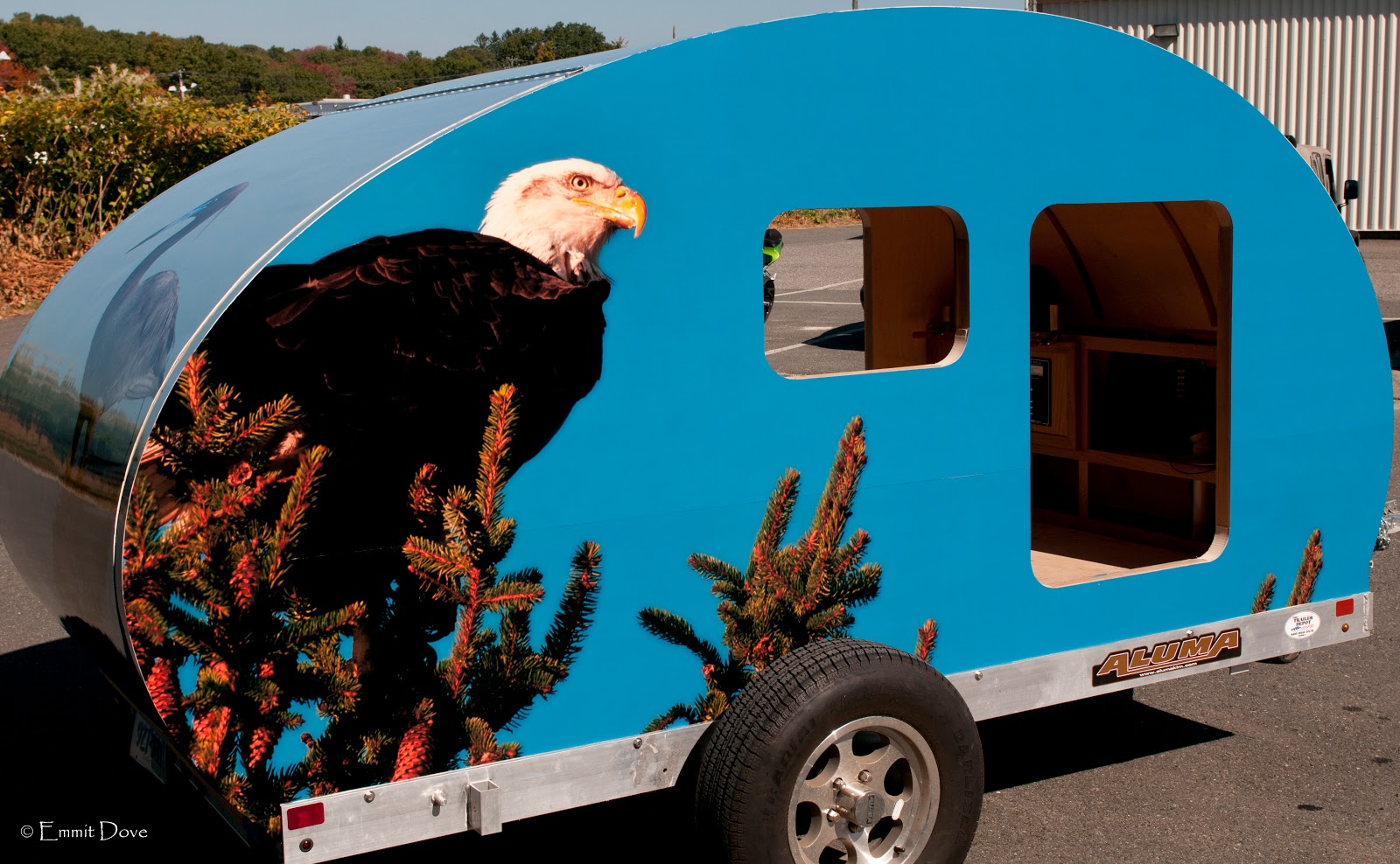
This teardrop Camper Decorated With Bird Graphics is the decal work of Stick It Graphics, and belongs to Emmitt Dove, a bird photographer who blogs about birds, photography and his trailer restoration project.
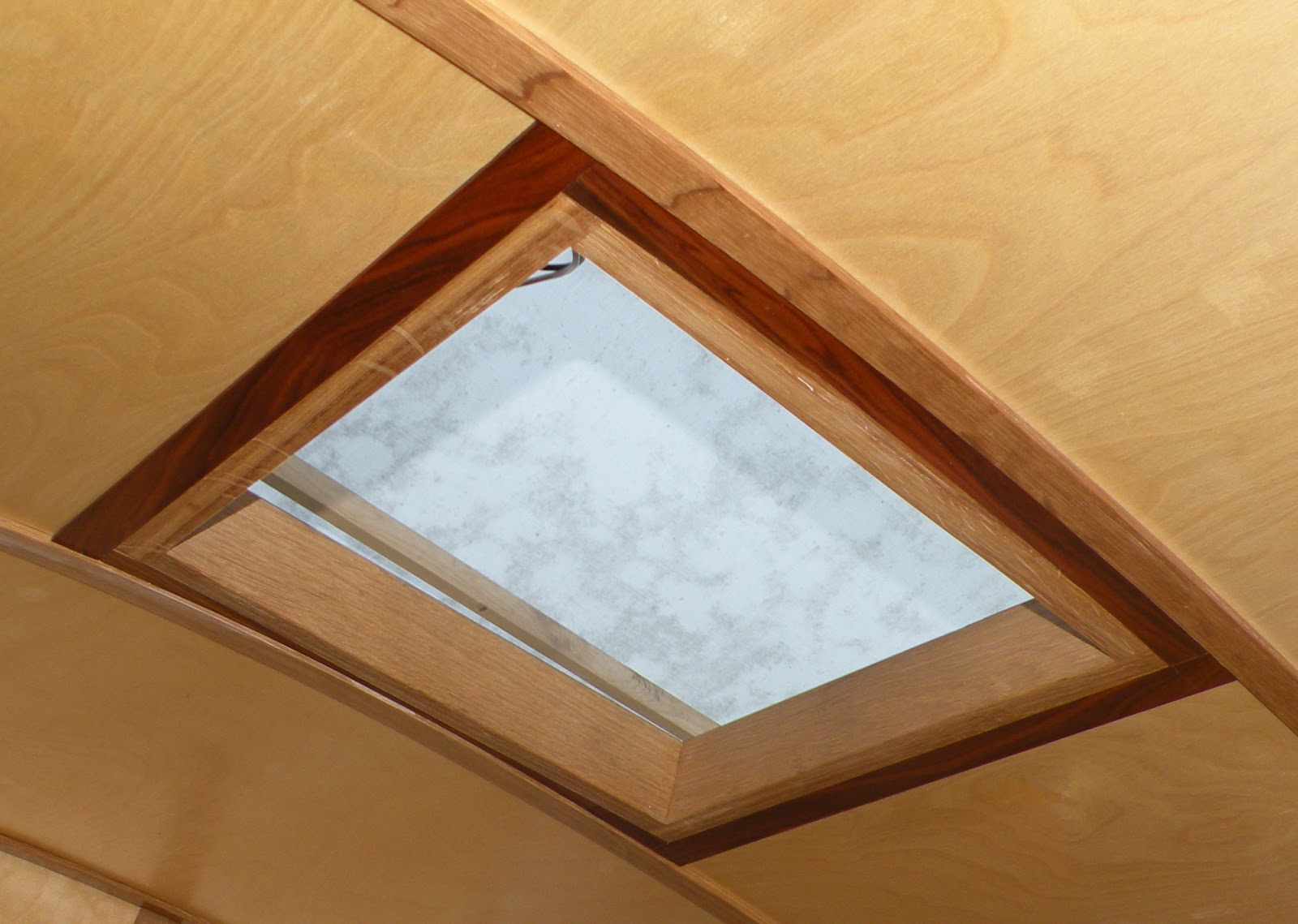
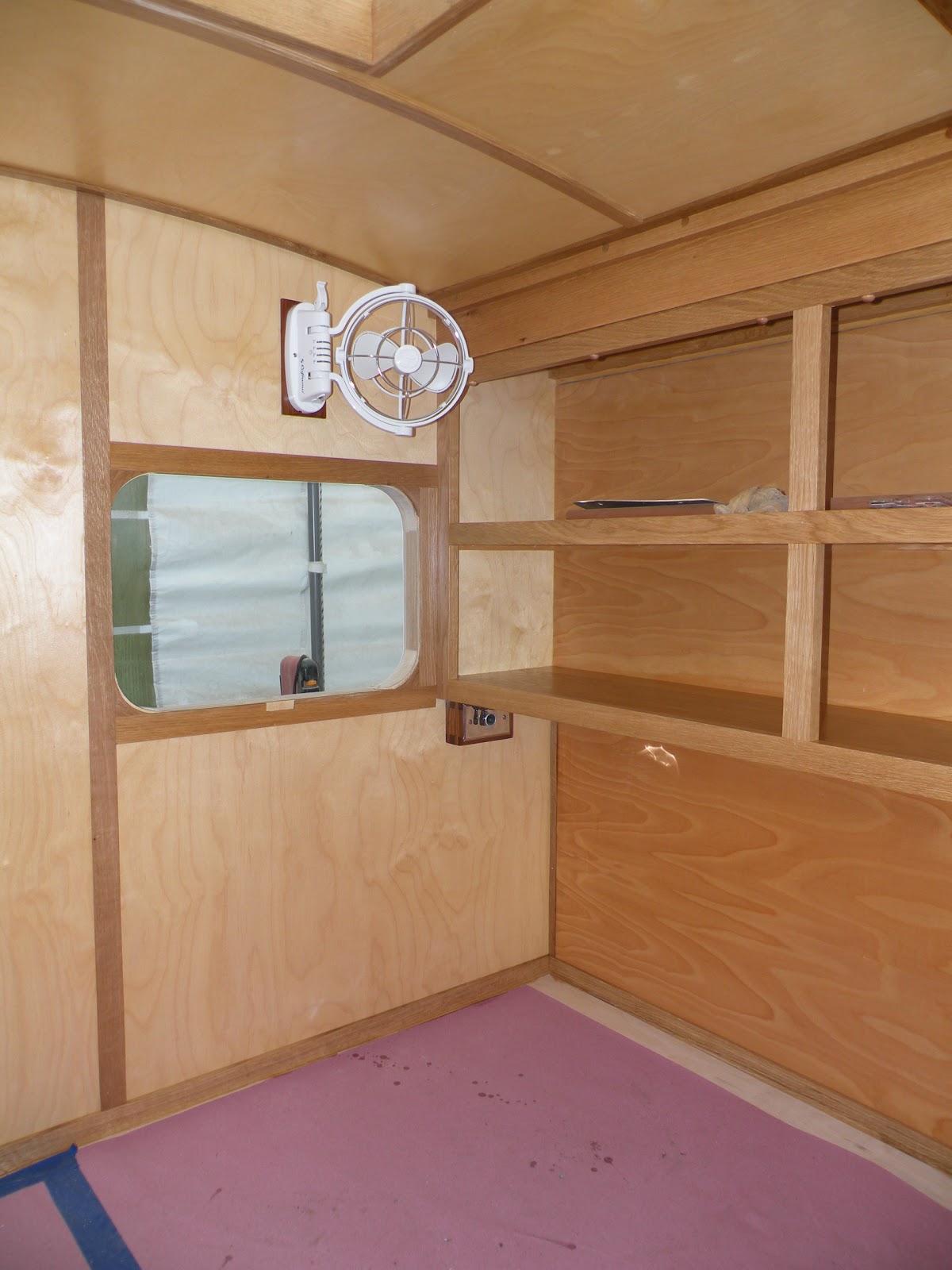
This trailer of his also has rosewood strips around the vent fan curb, and a bunch of custom cabinetry, with custom knowbs a removed spare tire mount (so Dove could get the wrap all around) (Mr. Dove, did you figure out a place for that tire yet?).
Dove also blogged about the difficulty of installing a permanent drawer in his teardrop camper. Why? Because the stove has to mount into that drawer, but the feed from the propane cylinder has to be connected as well. So if you want to have a stove drawer extended and the door under it closed, the gas feed doesn’t really work or fit right. Good to note for all you customizers out there.
Dove proposed two points why the door should open while the stove is in use”
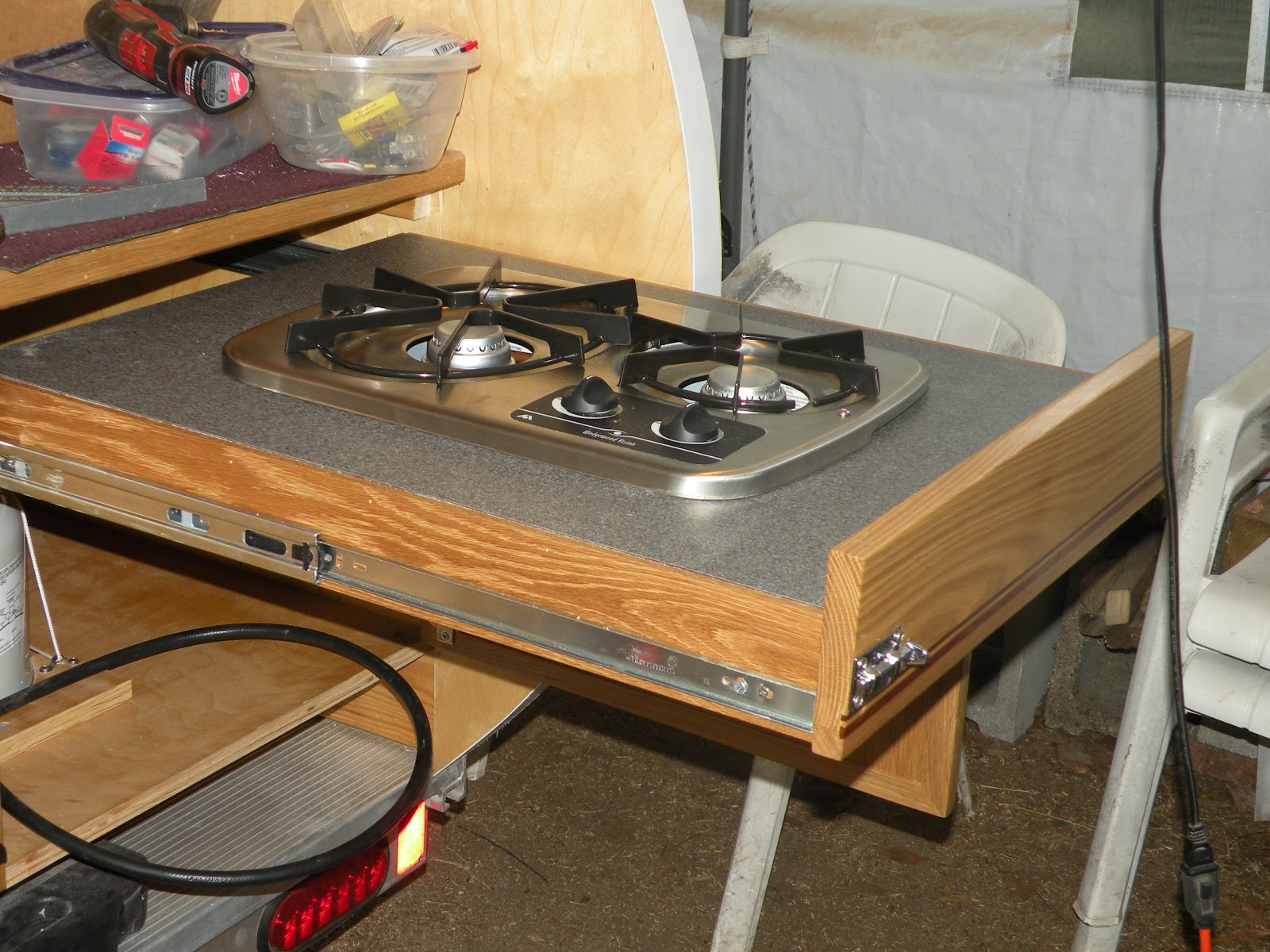
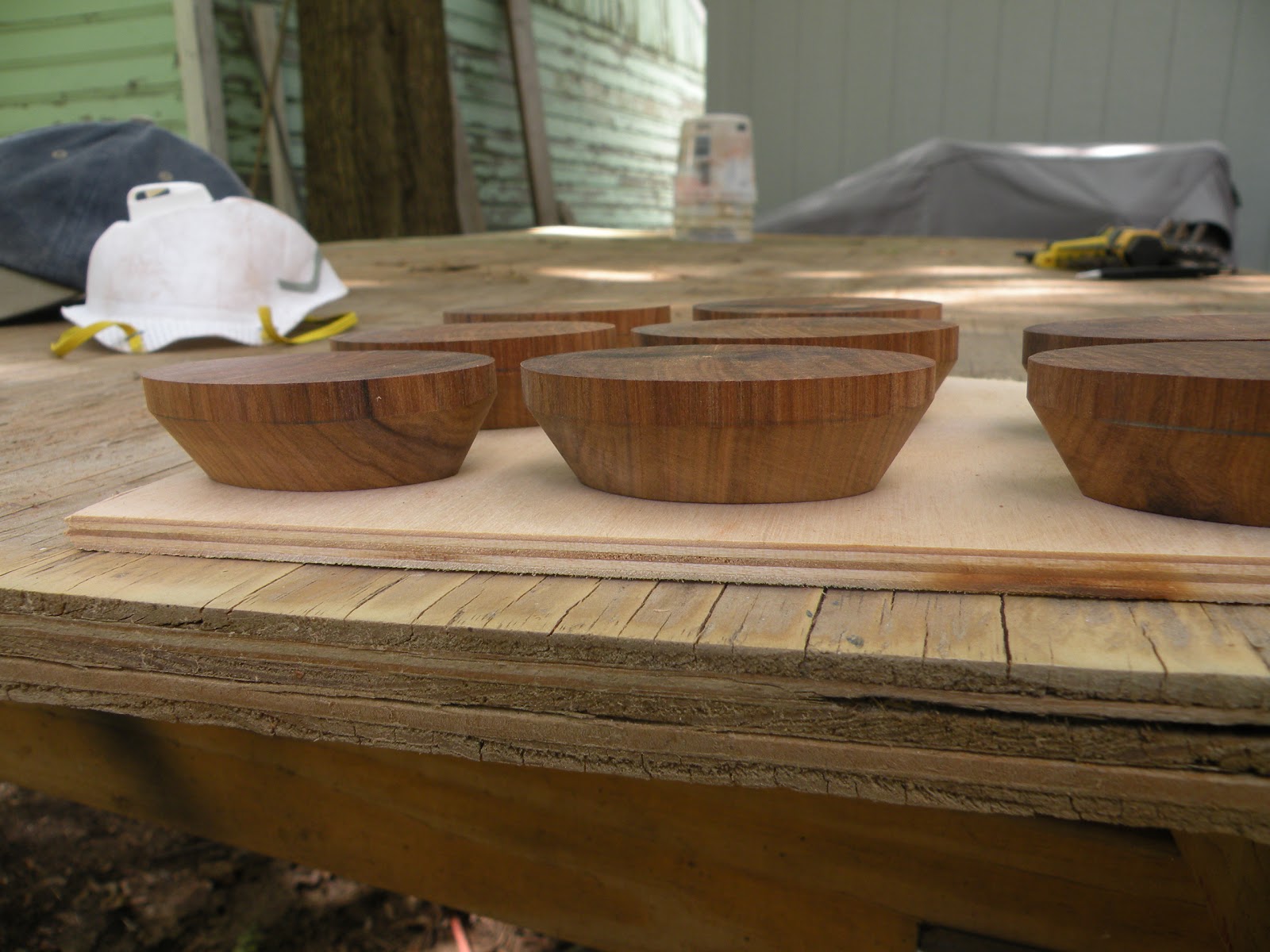
- One must open the door to get at the gas valve on top of the propane cylinder in order to turn the gas on or off.
- Since the door beneath is open, it provides excellent support for the extended stove drawer if the door is open to 90 degrees.
What Is Tilt Shift?… And Some Amazing Van Gogh Examples

Reprinted with permission from TheSpeaker.co
What is tilt-shift and how is it used? Some examples — these amazing Van Gough scenes — of tilt shift will give a good context. But there’s more than one way to create the effect of these images, as you’ll later find out in this article. However, you probably want to learn how to do it with a camera, so we’ll start there.


What is tilt shift?
Tilt-shift is what happens when you use a “tilt-shift lens on your camera. As you can see, it’s tilted.

The above image is what photographers usually use. You can actually make your own, though, and this photo gives an even better idea what the lens is doing. The one on the left is a store-bought Nikon tilt-shift lens. The second one is a kind of home-made version made by Dutch photographer Henk van Mierlo, and it uses an Ebay-purchased Nikon Bellows PB-4, a camera often discarded. (Van Mierlo used a 135mm lens on it rather than the regular 50mm because the 135mm lens allows you to focus at infinity, but it also needs an enlargement, which van Mierlo also kind-of home-made by drilling a hole in a body cap and adding some silver tape to make if fit tightly )
)
The shifter (really just an angle-piece for the base of a lens) can also be made any other way. Some people 3D Print them, but you could even just seal light out with black tape and hold your lens on an angle.
What does a tilt-shift lens do, then? It allows the photographer to shift focus from the person in front to the person in the very back of vice-versa.
SO, that means you can keep your focus on the guy in the back while other things happen in the front.
Here’s three images. The first one is what you normally see in your camera — it’s focused on the person, leaving the background out of focus. (Images by The Slanted Lens) In the image below, the lens is swung to the right. Look at the focus plane. You can expect anything along that line to be in focus — a normal lens can’t do this. The background and the person (one of his shoulders) are both in focus on the left side of the frame, so it looks like the foreground is out of focus while the middle and background are in focus.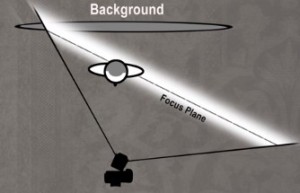
And in this image below, the person is in focus, but one of his shoulders is out of focus, and so is the background, in part of the frame. So everything is out of focus except the persons face and one shoulder — kind of a vertical line of in-focus surrounded by a blur.
 So that’s what the lens is and does. But really that’s not very impressive, because you can pretty much modify your focus anyway — with your camera and later with blur on your computer. So what’s the secret to the strange toy-like images of van Gogh or cityscapes like this one by Neil Roberson (New York)?

What’s the secret?
When you see these amazing images, you may notice that part of the effect is dramatically shallower depth-of-field. The lens is working like lenses do when we’re dealing with super-macro photography (macro lens for up-close shots). So we think we might be seeing something tiny.
You’re also seeing a high-angle shot. This is a shift on your lens — i.e. the camera points at an lens that is angled to the side. You’re not seeing a tilt — which is when the lens is raised up higher or lower against the camera, which creates a distorted-image effect.
NOTE: You can also use the shift to keep focus on the entire length of a small object in macro photographer. For example, if you’re shooting a ruler on a table, you can maintain focus on the entire length of the ruler with a shifted lens, which, as you remember from the three grey images above, means that the focus plane can be moved any way you like it.
How to create a tilt-shift effect without a lens… on your computer
You can adjust a photo’s contrast, color saturation, and depth of focus. This is actually the technique used to make the van Gogh images above. Note that in these images, created by Artcyclopedia, nothing was added to the paintings. The creator of the images above just manipulated the light and adjusted which areas of the frame were in focus.
Is this article worth sharing with other photographers and van Gogh enthusiasts?
By Andy Stern
Being On the Autism Spectrum
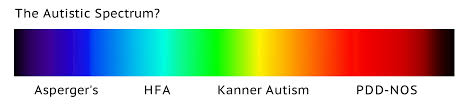
Whenever I tell people that I am on the Autism Spectrum, they are quick to ask me what the Autism Spectrum is. What does it mean to be autistic? What it basically means is that my brain is wired differently compared to other people. I tend to perceive things differently. I view certain things in a different light, so to speak. From what I am told, being autistic means that you are tremendously gifted in certain areas while greatly lacking in other areas, particularly when socializing is involved.
Autistic people face a myriad of social challenges that can be hard to overcome. For instance, it is easier to get on a keyboard and type messages out on the internet for everyone to read than it is to approach someone in-person and have an in-depth conversation with that person. Autistic people are far from being masterful when it comes to properly introducing themselves simply because they tend to be shy.
Autistic people tend to handle situations differently than other people. I know from my daily experiences that I tend to form the habit of not wanting to deviate from a routine that I feel comfortable with. Whenever I establish a routine that comforts me, it can be hard to get me out of that comfort zone. Sometimes it will take a sudden turn of events to force me to drop these routines and start anew. This is a common trait of autistic people in general. We want things to flow as easily as possible and we don’t want the things that comfort us to be disrupted. This is something we do need to work on.
When I read countless success stories about other autistic people, there is one thing that jumps out at me. That one thing would be the fact there is always at least one thing that we are good at. There is always something that interests us, something that drives us to excel. Most of the time we don’t even know what that thing is until we realize its positive effects afterward.
For example, I had no idea what I wanted to do in the long run in my life until recently when I realized just how much impact I truly had as a writer. I tried to convince myself that I could be a sports athlete, a professional wrestler or a computer programmer, but I was none of those things. The more I looked into doing those things, the more I realized that these dreams were unreasonable. If I can pinpoint the one valuable lesson I have learned in searching for what I was good at, then it would be this. I learned that I needed to stay true to the skill I had been developing all along, which was writing. I thoroughly practiced my writing skills when I was a kid.
Some people say that being autistic is like having a disease, but I believe that isn’t at all true. Autism isn’t something that you can cure. Once someone is diagnosed with autism, there is no special medication that one can take to stop being autistic. Autism doesn’t work that way. While being autistic has its disadvantages, I believe it is important to note its advantages as well, and I also believe that sometimes autistic people can surprise others with their talents at the most unexpected times.
All About Football
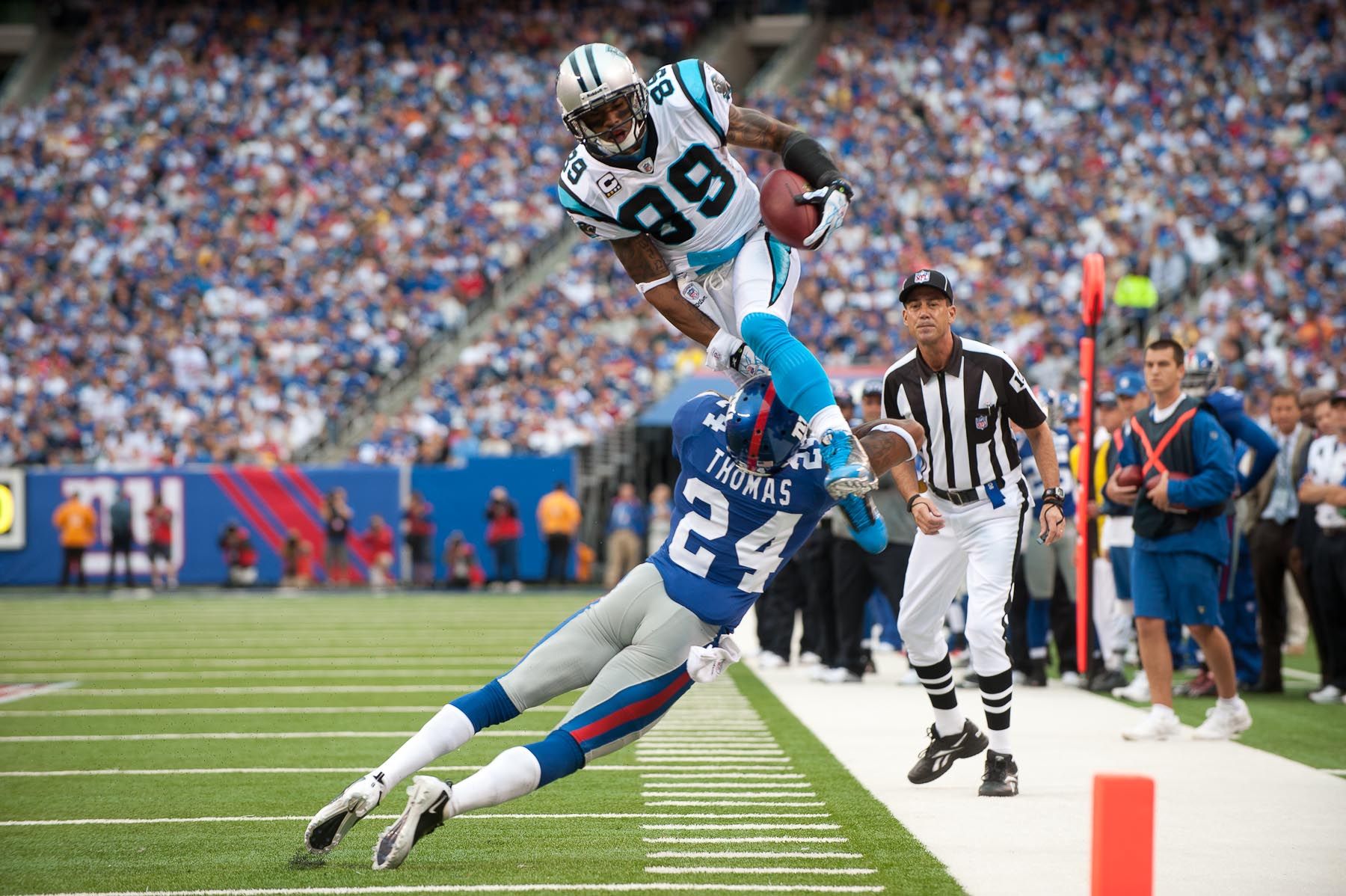
American football is closely related to two English sports in rugby and soccer, and it originated on the fields of North American universities. The first intercollegiate football contest was held in New Brunswick, New Jersey on November 6, 1869 by players from Princeton and Rutgers. Walter Camp was the man responsible for the transition from the rugby-soccer hybrid called the “Boston Game” to the sport of football we know today. You may find that fans of american football also take up a game called fantasy football, where competitors choose imaginary teams from players in the league and score points according to the actual performance of their players. If you haven’t heard of this before, doing some research will help you get to grips at least with the basics.
Known as the “Father of American Football”, Camp served on the rules board of the Intercollegiate Football Association and made key innovations to gridiron football, including the elimination of the opening “scrummage” that was seen in rugby and replacing it with the requirement that a team give up the ball after failing to move down the field a specific yardage in a certain number of downs.
The objective in American football is to score more points than the other team during the allotted time. The team with the ball (the offense) has 4 downs to advance past 10 yards and can score either a touchdown (6 points) or a field goal (3 points) once they get close enough to the end zone. After scoring a touchdown, teams will attempt another score from the 2-yard line. Teams can attempt a 1-point field goal kick or they can advance the ball into their opponents’ end zone for a 2-point conversion. When on defense, teams can down opposing offenses in their own end zones to score a 2-point safety.
Football games are typically 60 minutes long, divided into 4 quarters of 15 minutes. Teams have 3 timeouts to use per half to temporarily stop play. A player carrying the ball is either downed by contact where the opponent tackles the runner by pushing him, grasping and pulling him to the ground, or touching him in any way prior to the runner’s knees or elbows touching the ground. A down ends when the ball carrier is downed or goes out of bounds, a forward pass is incomplete, the ball hits the goalpost or a touchback occurs.
In most cases when a foul occurs, the offending team will be assessed a penalty of 5, 10 or 15 yards, depending on the foul. Most personal fouls, which involve danger to another player, are 15-yard penalties, and in rare cases they result in offending players being ejected from the game.
Football Leagues
The National Football League began its operations in 1920, but it was originally called the American Professional Football Conference and the American Professional Football Association at the time. The American Football League was founded in 1959 to go into competition against the National Football League, but ceased operations in 1970 to merge with the NFL. This merger was made effective after Super Bowl IV where the Kansas City Chiefs defeated the Minnesota Vikings by a score of 23-7. The NFL has grown considerably since it’s formation. Games are now televised and enjoyed around the world. Merch is now sold so that fans can dress up to support their teams and football betting is just as popular as the sport itself (where states allow it). The global growth of American football doesn’t seem to be slowing down either!
The Canadian Football League was founded in 1958 and is currently the 2nd most popular sport in Canada, only behind the National Hockey League. The Canadian football game features a few different rules compared to the American game, such as expanding the length of the football field and having 12 players on each side of the field instead of 11. Canadian football allows teams on offense only 3 maximum downs per possession instead of 4. Teams can score a one-point rouge when the ball becomes dead in the possession of its opponent in its own goal, when the ball touches or crosses the dead-line, or sideline in goal, and touches the ground.
From 1992 to 1995, the CFL pursued expansion efforts in the United States to feature its events in 2 countries. Sacremento, Las Vegas, Baltimore, San Antonio, Memphis, Sherveport and Birmingham were the American markets the CFL expanded into. Since 1996, CFL games have returned to being exclusively played in Canada.
There are also American football leagues exclusive for women to participate. The professional women’s football leagues that are currently active are the Independent Women’s Football League (founded in 2000) and the Women’s Football Alliance (founded in 2009).
Another American football variant that is more radical in design is indoor American football. Played on a 50-yard field instead of a normal 100-yard field, indoor football features a few rules that differentiate from the original game, such as keeping the football in play after it hits the fences that surround the goal posts. In this variant, players can go only go out of bounds after they make contact with the walls that surround the field. Indoor football games are typically played with 8 players on offense and defense, as opposed to 11 players in the original game. The most popular indoor football league would be the Arena Football League, which was founded in 1987 by Jim Foster.
Creating Video Game Characters

Why do some video game characters stay on top?
Only a few animated video game characters have stood the test of time in remaining recognizable, important and influential, but have you ever wondered why some of the most popular video game characters stay at the top? Is there a secret formula to use in order to make a great main protagonist of a video game franchise? Are there specific themes that need to be utilized to make the character shine?
One mistake that creators often make when initially designing their own video game characters is that they try to make the design process too complex. They will sometimes want to implement too many elements to flesh out a character’s backstory or they will try to make the character flawless. A character that is presented as being perfect will never win the approval of gamers who play your games. For every character that you create, from the main protagonist and the main antagonist to everyone else in between, you have to provide a few flaws and weaknesses for them. A character that has some flaws is more likely to obtain the sympathy of your gaming audiences.
A character’s backstory doesn’t need to include every unique element imaginable to resonate with gamers. They typically want to be emotionally invested in a character with a backstory that is unique, but not too complicated to understand. You don’t need to stick to a specific theme when creating a character, but you do need to tie your character’s foundation around something that gamers can identify with. For example, if your character has his or her own logo or symbol that means something to them, then you can highlight that and make it a central part of your character.
It doesn’t hurt to include a few trivial things about your video game character that don’t necessarily matter to the game itself, but only serve to expand on that character’s personality. For example, we know that Donkey Kong and his friends love bananas since they are used as currency on his island in games. Mario, a pudgy Italian plumber who can jump really far and high, loves Italian food. Sonic the Hedgehog, a blue hedgehog that can run at blinding fast speeds, loves chili dogs. Other character traits to include would be to describe what fears the character has, or if they have any hidden talents.
There are key differences between main protagonist video game characters. Mario is known for his jumping abilities and solid platforming skills. He was originally called Jump Man when the arcade game Donkey Kong was released. In the Donkey Kong Country series for the Super Nintendo Entertainment System, Donkey Kong and his pal Diddy Kong utilize barrels to either throw at enemies or use as cannons to launch themselves to different parts of levels. Bomberman is a bomb-throwing hero who uses a wide variety of attacks to take down enemies, but he also finds the time to ride on his faithful companion Louie, a kangaroo-like creature, as seen in the Nintendo 64 game Bomberman Hero.
Sonic the Hedgehog is mainly about speed while some emphasis in his games are also put on basic platforming skills. Sonic’s momentum-based style of play keeps gamers in suspense as he zooms by various parts of levels, acting like a bouncing pinball sometimes. Ratchet and Clank are a dynamic duo of heroes who travel from planet to planet to stop enemies from taking over galaxies. Ratchet, a Lombax, is a mechanic who likes to build and fix things. Clank is a small intelligent robot who can transform into a huge destructive robot at various points. Ratchet gets to blow enemies away with futuristic weapons that pack a punch with gamers that are science-fiction enthusiasts.
Sly Cooper is considered to be a “Master Thief”, a scheming raccoon who literally steals valuable items to stay true to his family’s legacy. Sly is part of a long line of thieves who made careers out of craftily stealing the most valuable goods. Having a team consisting of a genius turtle named Bentley whose expertise is in technology, a large and powerful hippo named Murray who has a great appetite, a dancing hipster iguana named Dimitri who is a fantastic swimmer, and sometimes even a cute vixen cop in Inspector Carmelita Montoya Fox who both chases him and adores him, Sly executes many jobs to help his gang and to stop criminals from taking over the world.
These are just a few examples of unique video game characters that have been successful. When you dissect these characters, you will notice that it doesn’t take much to give these characters an identity, a purpose and a variety of motivating factors that makes these characters what they are. Most importantly, though, is that these characters are fun to interact with when you play as them in their games. These characters allow you to expand your imagination on what a character should be like and how far you can take your own custom characters. Video game characters are mainly characters that we can get behind, enjoy playing as, and are willing to go on adventures with in and out of games.
Isn’t This Why We Love Our Teardrop Trailer?

You can take a tent anywhere on the back of your bicycle, but a tent has to be put up, taken down, and what about all the stuff inside it? You have to carry that, too. On the other end of the outdoor dwelling spectrum, motorhomes have everything you need, but they’re big, you have to store them, you have to feed them fuel, do repairs, maintain them, make sure they don’t rot, clean the cobwebs, clean the mold. And they can be expensive.
Teardrop campers are on the smaller end of the in-the-middle sized dwelling. Like a trailer, you can tow all your gear, food, and whatnot else in them, and not have to move that stuff around much. Like a camper, you can sleep in them. But they’re small and light, so you can tow them with anything, and you can bring them pretty much anywhere. It seems a very nice, easy, convenient fit. They aren’t too bad to store in your driveway or garage, either.
That must be why they’ve enjoyed popularity since the 1930s. After the war, and even during war years, they really got popular, as the Great Depression ended and vacationing started happening more.
Back then, the average family car had an engine with around 100 horsepower. That’s why their hotrods are so massive even though they often have the same horsepower as a compact Volkswagen car nowadays.
Back then, too, the chassis of the teardrop campers were steel, and the panels wood (that’s why so many of them are called “woodies”). That’s because, in part, a lot of the materials came from the war. Other teardrop campers’ skins often came from war bomber wings — aluminum. Those are those shiny silver-looking ones you see.
Around the late 50’s/60’s, Americans wanted bigger RVs, and teardrop campers declined a bit in popularity. Back then, gas was 10 – 20 cents a gallon, too.
Nowadays, there aren’t a lot of commercially manufactured teardrop campers. But a lot of people renovate old ones or build their own from plans. They can be made the same as they ever were. A simple construction that didn’t need to change, I guess.
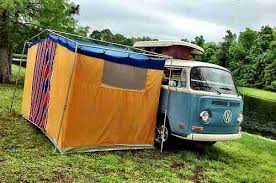
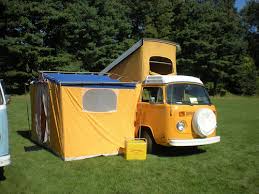
When you’ve got it all!!!? VW campervan with a tent!
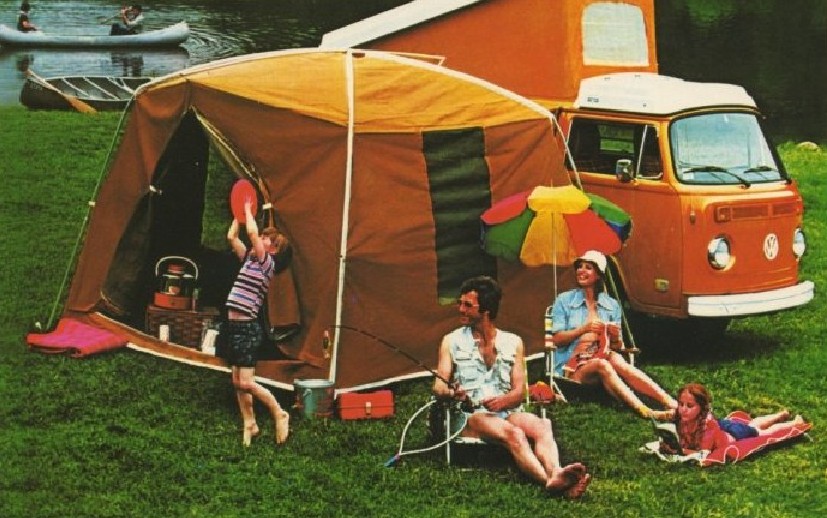
Can you believe they actually made these just like this? Or maybe: Can you believe they don’t still make them?
The popularity of the Westfalia. The demand to keep owning them and buy new ones.
Actually the unit you see here, with the tent. You can actually get the tent alone. Then you can attach it to your Westfalia of Vanagon.
It has detachable curtains and a nice little vent at the top of the tent area. The frame is inside and there are springs on the connections (which make it a little harder to put together maybe, but what if it makes it a little more durable?).
The canvas on these can become brittle with age and weather (and it might not be kept by the owner, or treated to last). In that case, some people re-canvas the tents.
The tent when its up looks like a little cave entrance. It’s not overly wide, but you could probably sleep a person or two on the ground outside the side door of your Westfalia or Vanagon RV.
Some Westfalia specs:
Class Van
Body style 3-door van
3-door pickup
Layout Rear-engine, rear-wheel-drive or four-wheel-drive
Engine 1.6 L H4 (petrol, aircooled)
1.9 L H4 (petrol, watercooled)
2.0 L H4 (petrol, aircooled)
2.1 L H4 (petrol, watercooled)
2.3 L I5 (petrol, watercooled)
2.5 L I5 (petrol, watercooled)
2.6 L I5 (petrol, watercooled)
1.6 L I4 (diesel)
1.7 L I4 (diesel)
Transmission 4-speed manual
5-speed manual
3-speed automatic
Wheelbase 2,461 mm (96.9 in)
2,456 mm (96.7 in) (GL syncro Camper)
Length 4,569 mm (179.9 in)
Width 1,844 mm (72.6 in)
Height 1,928 mm (75.9 in)
1,735 mm (68.3 in) (Carat)
2,055 mm (80.9 in) (Camper)
2,085 mm (82.1 in) (GL syncro)
The advertisements for these things in 1977 said, “It works as well as it can play.” Anyone had any experience with these? How do they hold up to camping?
The Sealander: camper on land, boat in water WHAT?

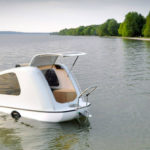
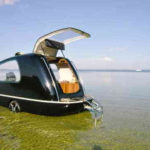
You can haul it through the forest and park it at the lake, then slide it into the water on its trailer. Your camper will float.
It has a convertible top, although the walls stay where they are. It’s kind of like the entrance to a cabin on a sail boat.
You can mount your boat motor on the back of the unit, on the ledge where the convertible top raises.
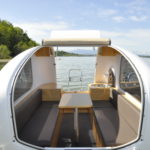
The cabin has two long bench seats; one along each side. They appear waterproof. Then a person can install a cabin-style (or RV / campervan style) table in the middle of the bench seats. The bench seats can also be pulled toward the center to create a padded surface area over the entire cabin — as a bed or mat.
Its German-made.
“The Sealander is a caravan and yacht in one. The high quality and aesthetics of boat-building are combined with the flexibility of a mobile home. Its dynamic and modern design expresses lightness and agility. For your perfect day out in every environment,” the company says on its website.
It’s touted as the first amphibian camper, but that might be a bit misleading, because we have amphibian campers and even camper-planes on this website.