This luxury yacht from Mondomarine is 187 feet long. The yacht company builds these things at a Sovonese shipyard that is now 100 years old, called Cantieri Navali Campanella (or “Campanella Shipyards”).
The company is building and selling yachts out of Campanella. It has reportedly sold 20 yachts of various designs and sizes (but all over 40 foot craft) over the past 9 years.
Featured music of the day:
To subscribe to this musician, click the red button:
In total, the company has sold 62 yachts. And they currently have 5 under construction.
The Edios superyacht is a design by Team for Design’s Enrico Gobbi.
Yacht specifications
Yacht general specifications:
Naval architecture: mondomarine engineering and arrabito naval architect
Exterior design: team for design – enrico gobbi
Interior design: team for design – enrico gobbi
Class register: rina c hull • mach, ych, unrestricted navigation
Flag: red ensign – compliance ly3
Hull material: steel
Superstructure material: light all
Yacht technical specifications:
Length over all: 57.00 m – 186.96 ft
Beam over all: 10.50 m – 34.44 ft
Draft: 2.90 m – 9.51 ft
Maximum speed: 16 knots
Cruising speed: 14 knots
Range at 12 knots: 3,300 nm
Fuel capacity: 120,000 l
Fresh water thanks: 15,000 l
Main engines: 2 x mtu 16v 4000 m54
Maximum power: 2 x 1,685 kw – 2 x 2,260 hp at 1,800 rpm
International gross tonnage: abt 800 gt
A crochet pattern for those who need darkness to get a good sleep. For those of us who have a hard time forgetting how bright it is on the other side of our eyelids, if you’re wanting to take on a small crochet project you can DIY your own solution, and make it custom to the colors you like. For those of us without crochet experience, maybe you know someone who wouldn’t mind a new project.
This is a crochet accessory that comes to us by way of Tanya at the Little Things Blog, who made the mask you see in the picture above in mint-colored yarn, and she said it was a fun crochet project to do.
For this DIY crochet sleeping mask project, you will need (crochet supplies):
– 3.5 crochet hook (E/4)
– Yarn in 2 colors (Tanya used mint cotton yarn with silver for the borders in the picture).
– Tapestry needle
– Scissors
Understanding of the pattern:
This isn’t one of those crochets where you start in the middle and do a whorl around to add size. Instead, you’ll start at the top and crochet your way down to the bottom.
In the middle of this is the nose gap, which you have to think about as you go.
At the end, you don’t fasten off; instead, single crochet around the entire mask twice.
Then crochet around 2X more with your second color of yarn (see the double border in the photo above to get an idea).
Fasten off and weave in the end parts. You’re done. For the full crochet pattern, visit Tanya at Little Things Blogged (click here).
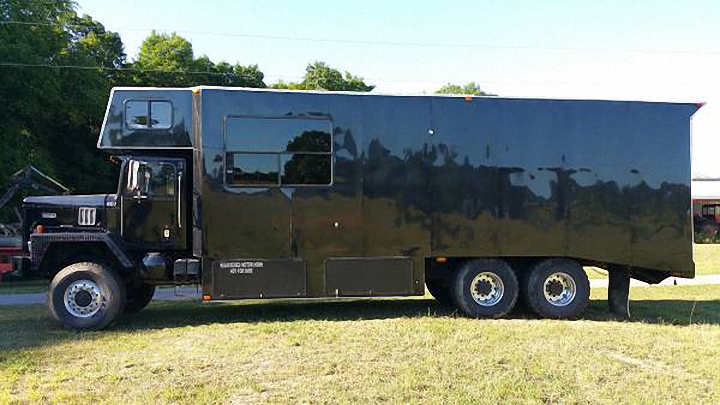
This BOV came up for sale a while ago. It’s a 6X6 motorhome with 400 horsepower and a 17 foot garage. This motorhome is based on a 1977 International Paystar 5000 chassis.
The truck was built custom, according to the owners (not sure if it sold — it was a while ago). It was in Northern Michigan at the time.
The International was originally a cement truck and got converted into this home on wheels, or camper on wheels.
Some specs:
– Big Cam 400 Cummins engine
– Fresh pump and injectors
– 6X6, but shafts currently pulled to get better fuel mileage as a 4X6
– Dyno’ed 330 horsepower at the rear wheels
– Airride updates on rear axles and suspension
– Six new tires — on forged Alcolas, plus spare tire
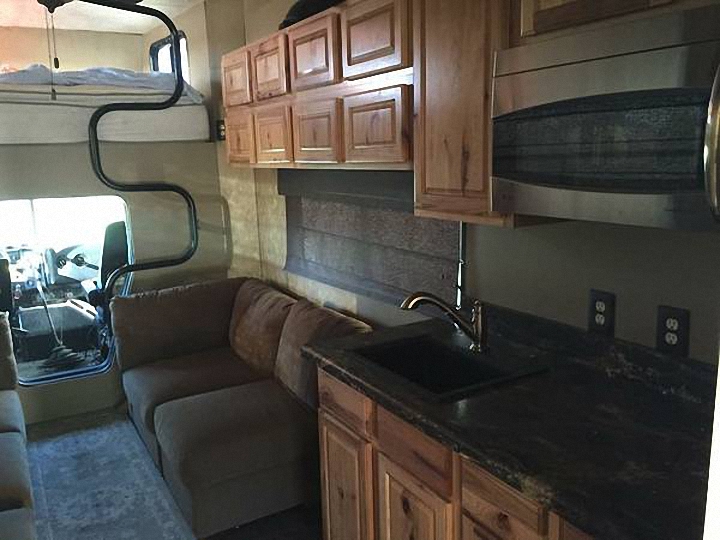
Motorhome interior:
– Spray-foam insulated
– Queen-sized bed above cab
– 120 volt 30 amp service
– toilet
– kitchen sink
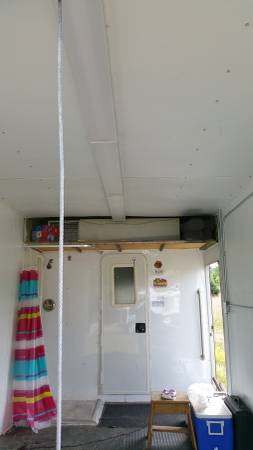
– shower
– convection microwave
– fridge / freezer
– air conditioner
– 60 gal. fresh water tank
– grey/black tanks
– water pump
– hot water heater
– can plug into city water
Dimensions: 13’3 at the tallest. 8’7 wide, and 39 feet long. It was selling for an asking price of $35,000. Like I said, this motor home was in Michigan on Craiglist, although the link isn’t working anymore.
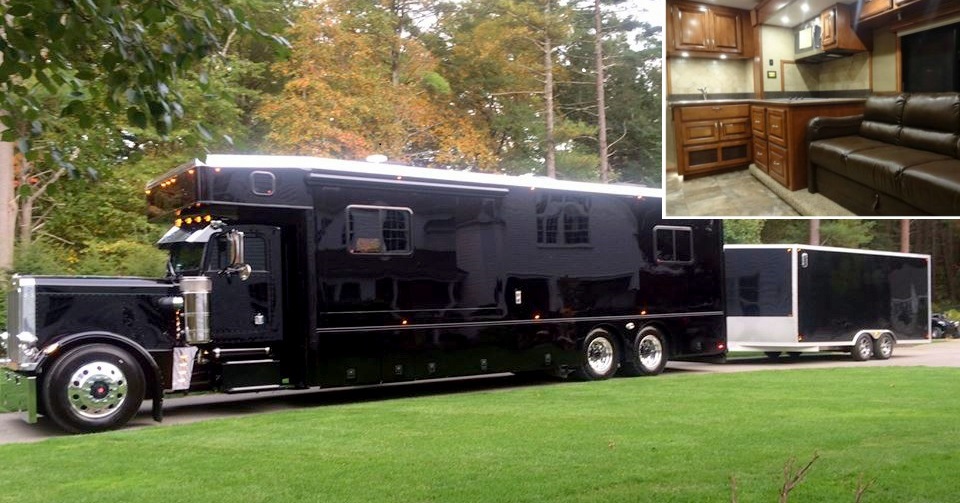
This custom motorhome is another one, quite unlike the last one, from Show Hauler Motorhome Conversions, that Indiana-based custom coach company we’ve recently been looking at.
While a lot of their motor homes are based on new International and other model chassis, this one’s built on a Peterbilt conventional.
Let’s call this a truck of few words, because we don’t have a lot of specs for the unit. We do have photos, though, of the custom interior work Show Hauler did on this coach.
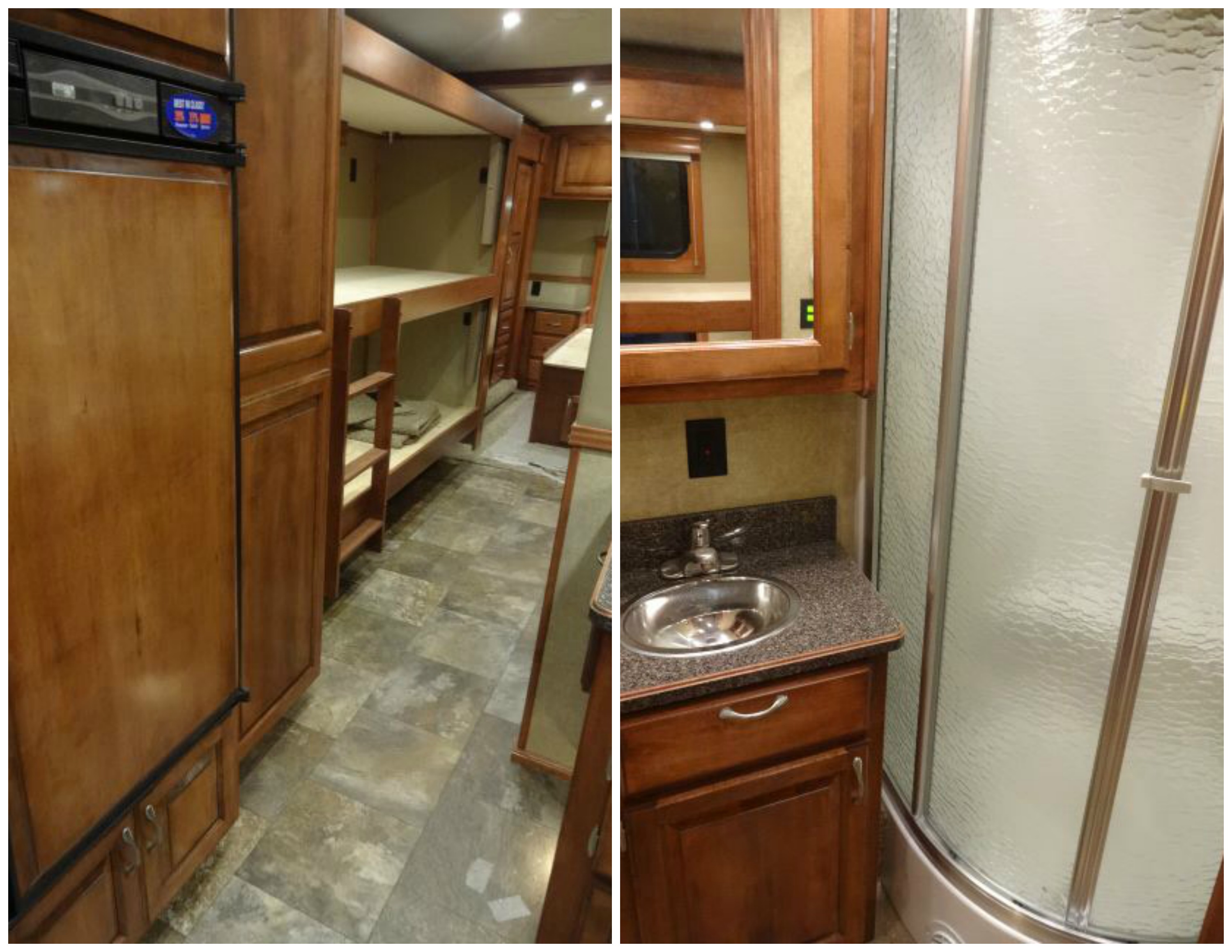
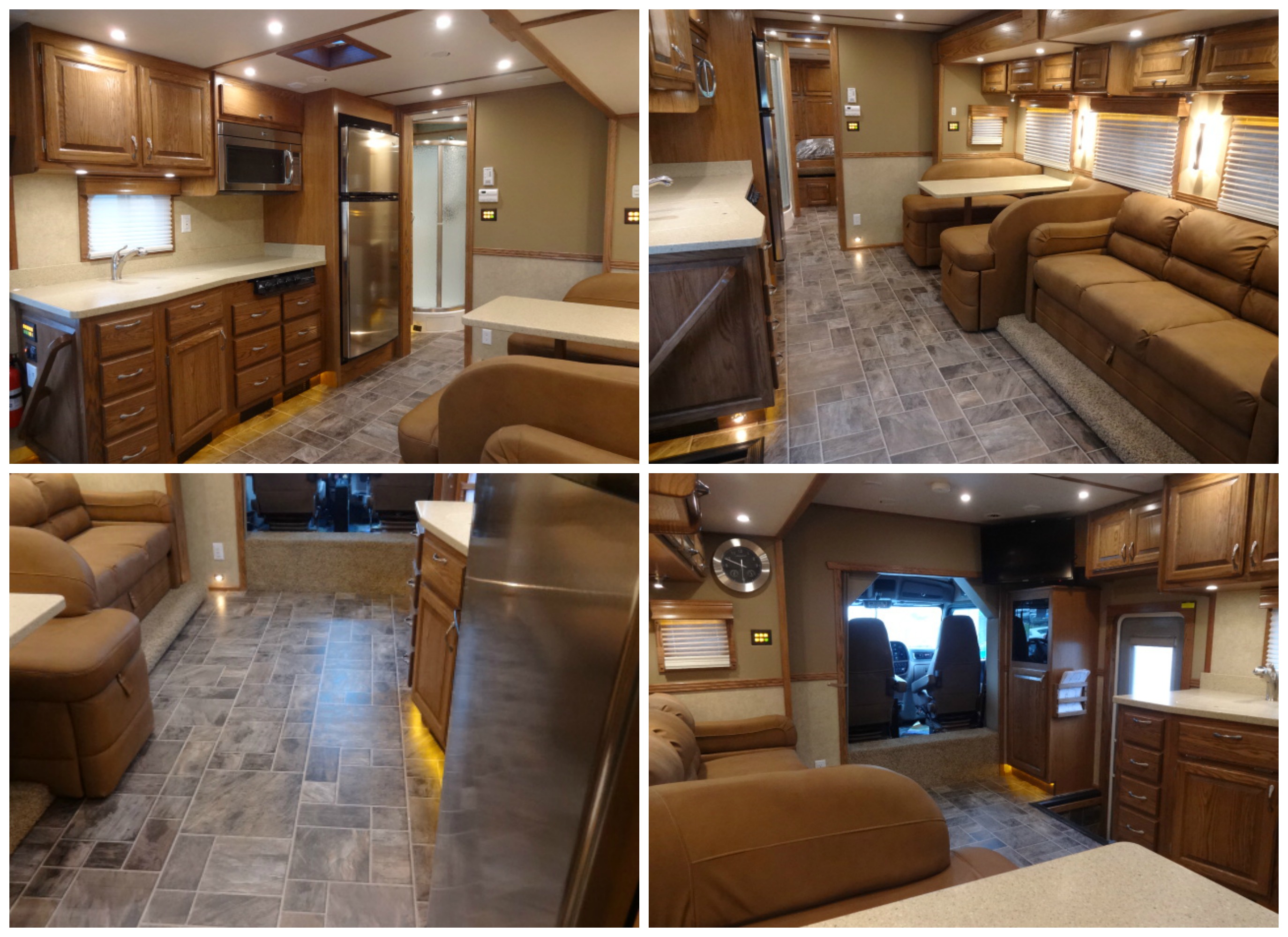
The interior is all wood cabinets, and it looks like granite counter tops. They have a microwave / convection oven mounted in the kitchen area.
Besides the master bedroom, which is in the back of the motorhome, there’s two bunk beds in the hall and another storage area/bunk at the front of the living area.
Tiled floors and a folding kitchen table, a bathroom with a shower unit, all matching interior decoration-wise with the rest of the coach.
This big custom motorhome is the work of a company I was just reading about today called Show Hauler Motorhome Conversions.
They do sales of luxury motorhomes they’ve already built, and they also offer motorhome conversion services. They’re based out of Indiana, and it looks like they have two offices in Middlebury (visit them, click here).
From what I’ve seen of their work, they have a unique look to their vehicles. Of course, there are a lot of similarities with the other big custom coach companies, but these guys make me think there really is something to picking your RV conversion company at least partly on their own style. If you are thinking of creating an interior like this, be sure to leave some space to put all products to care for your vehicle, this includes things like generators, which can be purchased form generatorgrid and screenwash. These products mean that if you run into problems that you will be able to help yourself out and be prepared for whatever happens. This may not be something that everyone jumps on straight away, but you’ve always got the option of using a camper hire service if you don’t have enough time to renovate your motor home.
For some people, looking to buy a motorhome is a lifetime dream, so you’d think that they would make time to renovate their new home. With that being said, this may take some time.
I’ll do some detailed write-ups on a truck or two of theirs in the future, I think.
Some notable pieces of information for Show Hauler’s services: they build units with horsepower ratings between 330 and 600, customarily (1000-2050 torque). Mostly they use full auto gearboxes or ultra shift transmissions. And for fuel milage, their vehicles are usually in around the 8-10 mpg range.
If you want one of these built, though, the time frame you should allow is estimated at around 4 to 5 months.
This blue 30′ motorhome is a 6×6 all wheel drive, with all wheel steering, with 2 slides.
Now to the custom motorhome interior.
Usually the interior height is around 7 foot 9 inches. The average sleeping capacity for these motorhomes is around 6, but they can be smaller, down to 4.
The price tag: $200,000 to $350,000 for motorhomes (they also do toterhomes and garage units, which are less).
Now some pictures of the interior of this big blue motorhome (they’re high res, so view on a large screen for best viewing). Keep in mind, they build these as custom motorhome interiors, so any of these details could potentially be rearranged.
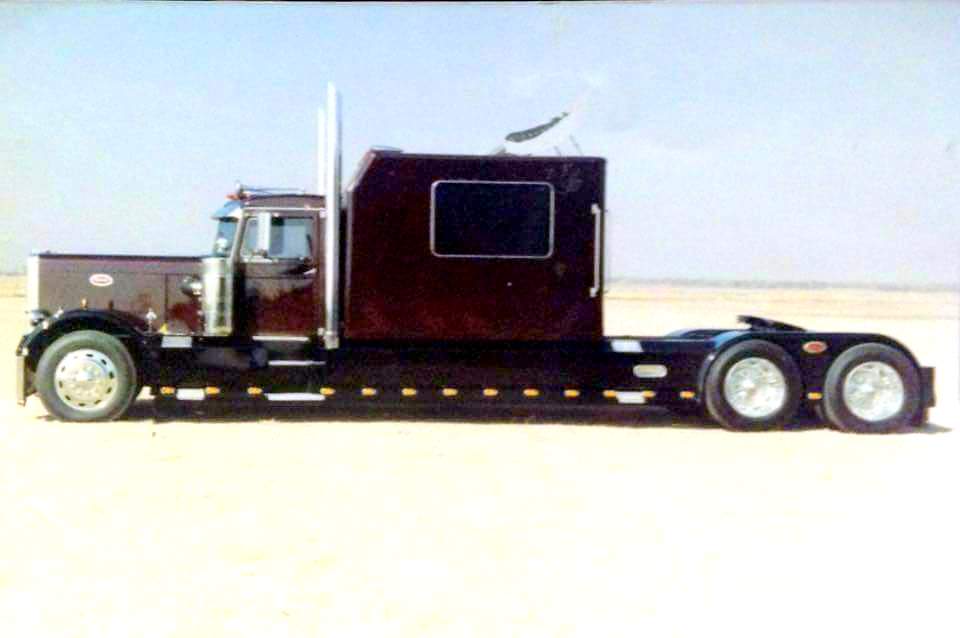
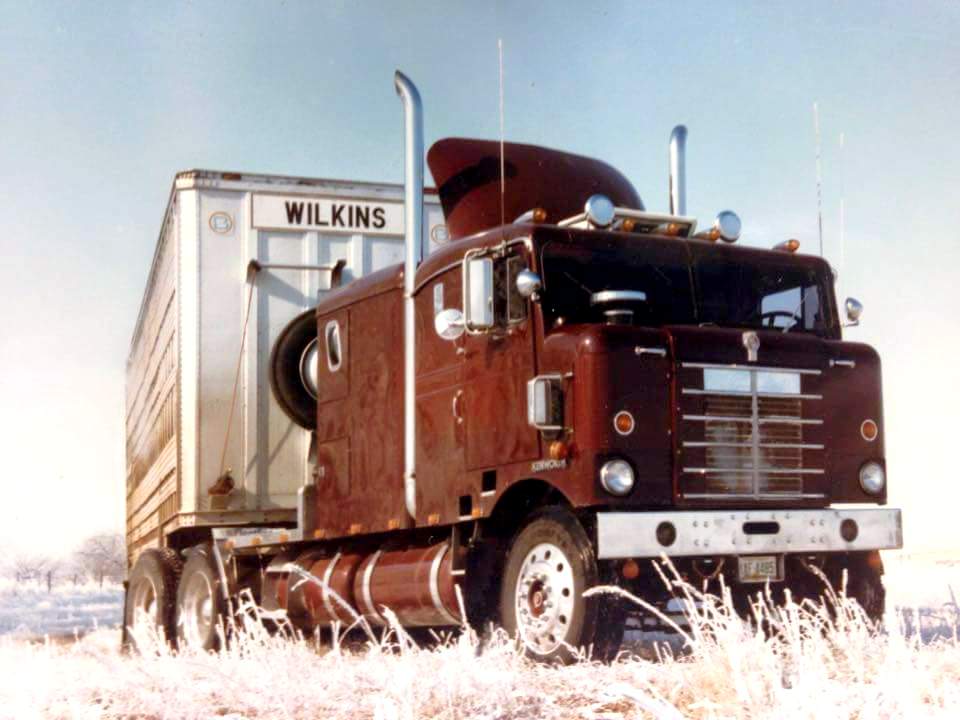
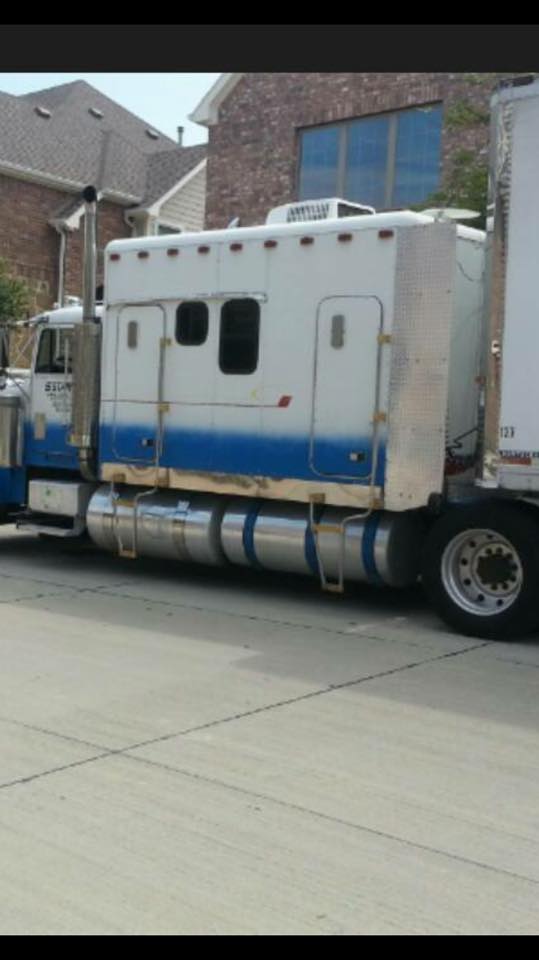
Well, people did start sending in their photos of various older truck configurations with home-made and shop-built sleeper units added on to them (pre legacy studio sleeper days).
And as people send the photos to us, we’ll add them to this page with the details people also send, so this page’ll grow a bit yet.
So here they are:
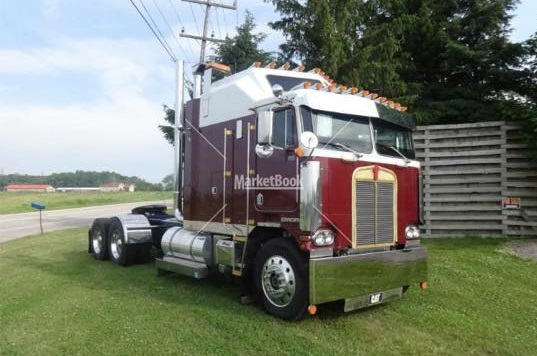
These three are of the same bullnose Kenworth pictured in the original post (click here), shared by Rowdy Farrington:
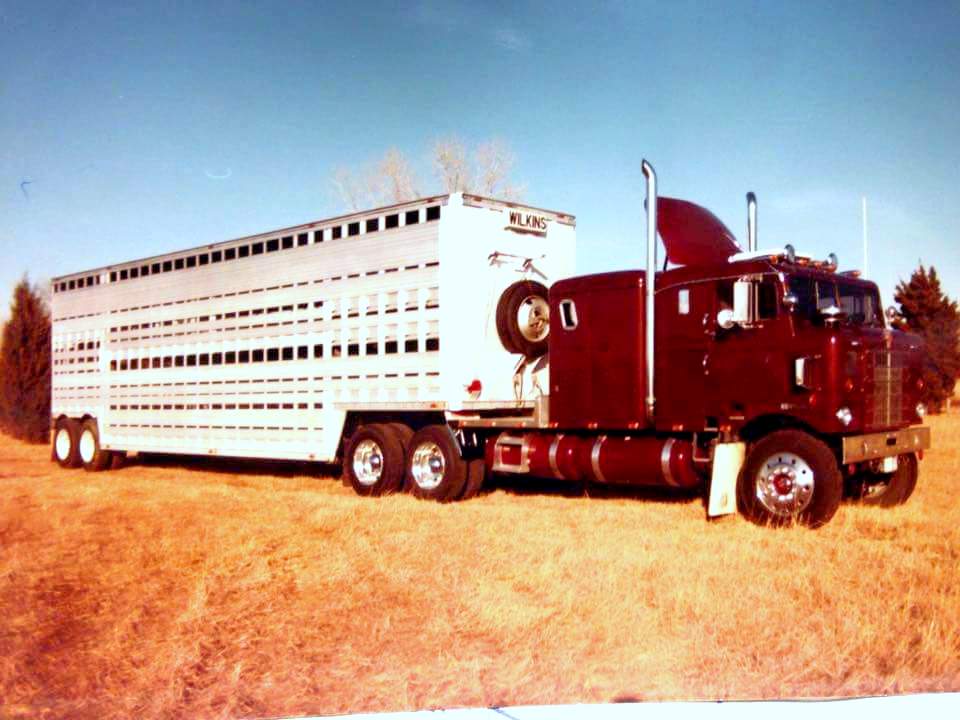
And another one, a burgundy conventional, slapped together by the master builder Cliff Wilkins, shared by Rowdy Farrington.
Expediter
What do you all think of this dump truck? It’s a 4900SA Expediter by Western Star. I thought it was worth at least posting it up here, as it’s a kind of striking machine, although I’m not sure of how many of you out there reading our vehicle posts are into this type of truck.
It’s a 2011, and they came with Detroit Deisel DD13 engines, which put out between 350 and 450 horsepower, and had Eaton Fuller FR-13210B tranmissions (they came in between 10 and 18 speed versions).
The cabs were steel conventional types, and the frame was 5/16 x 3-1/2 x 10-5/8 in. steel 120KSI. They had WABCO 4S/4M ABS brakes and had 12,000 / 36,000 suspension (with a taperleaf on front and flat in the rear).
The front axels had 12,000 pound capacity and the rears had 40,000. Wheelbase was 188 inches.
I’ll write up more on these types of trucks if there’s interest in them.
Classic Cabover
Since our first write up on this classic truck, a lot of people have been filling in the details on it. Not only filling in details, they’ve been posting their own questions.
So this is for all you out there who want some info on this big classic Kenworth.
To view our original write up on this custom cabover, click here. There’s another update there too from that page that has some info about how the truck used to be.
According to Milton Wood III, this truck at some point after this photo was taken (photo above) had its big sleeper removed, and the owners cut the tractor really short and repainted it. It was painted white. Johnny Di Franco said he thought it lived somewhere in Ontario now. Then, according to Ernie Erickson Jr. it has been painted again and he sent 2 photos (photos down below), one of the cabover and one of the bunk that used to be on it (special thanks to Ernie here). It was originally an ATDS truck. It was originally an ATDS truck.
Not only did a bunch of people say they remember the truck from when they were young, and some said they saw it at Truckers Aid, they said they’d like to know where it is now. Since it’s changed quite a bit since the photo, its a good thing people took these photos. Thanks photographers (by the way, we want to know who you all are, so we can note that in here too). Thanks guys.
Opinion seems somewhat sharply divided on these European models — the current-day ones and the concept ones like this on, based on the Volvo models.
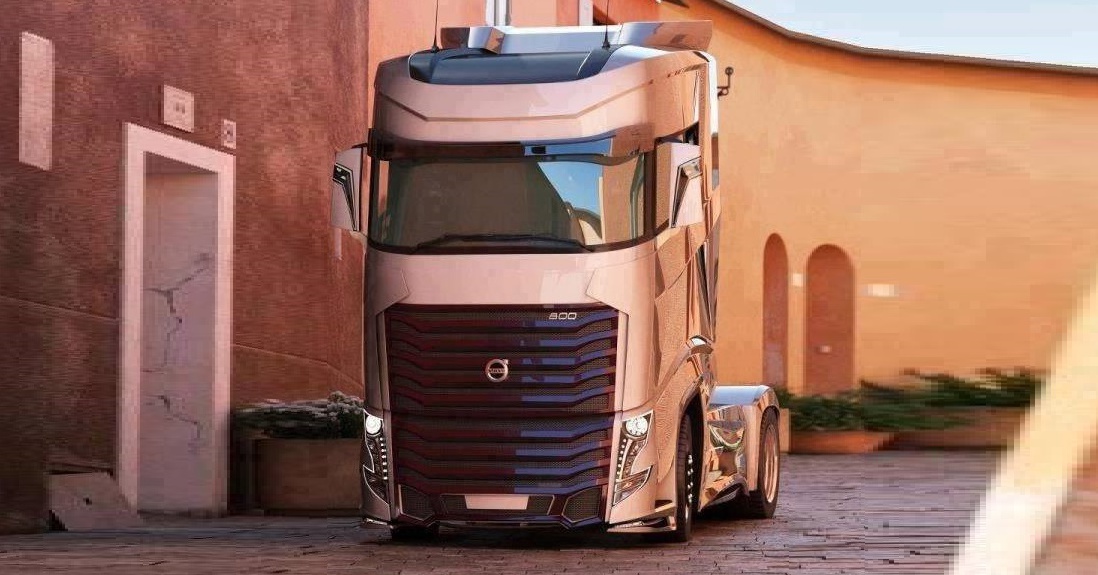
This particular one is based on the current Volvo trucks (this isn’t the same company as Volvo cars). It’s being called a Volvo FH 800 by its designer. I think the designer of this one is Levent Tuna, who also designed the Scania R1000 concept, but if anyone is 100% sure of the designer let me know so I can finalize that detail.
The design has been discussed since 2013 when a forum avatar named Vladapo63 first asked about it. It has also come to be associated with “a transformer too lazy to hide” all over the internet.
Although the above image may not be part of Volvo’s 21st century direction, the one below is part of their Volvo Concept Truck 2020 plan.
The 2020 plan is one of the things Volvo is focusing on now, and its about environmentalism and road-friendliness in the transporter models they produce. This boils down to aerodynamic design (reduced fuel consumption and CO2 emissions) in large part, which gives designers a chance to participate.
“[O]ur vision for the future is not that far away,” said Volvo Trucks design director Rikard Orell. “Much of the technology in the Volvo Concept Truck 2020 is already available.”
Another part — much discussed by truckers from owner-operators to hired ones — an auto-pilot system that will have road trains of driverless vehicles convoying across Europe with freight.
However, I’ve heard a lot of contrary viewpoints to a near future with no human truck drivers. There is just so much important work truckers do that robots cannot do, and robots being versatile like humans, so adaptable, learning, understanding priorities, and making decisions, a robot-truck driver computer might be further away.
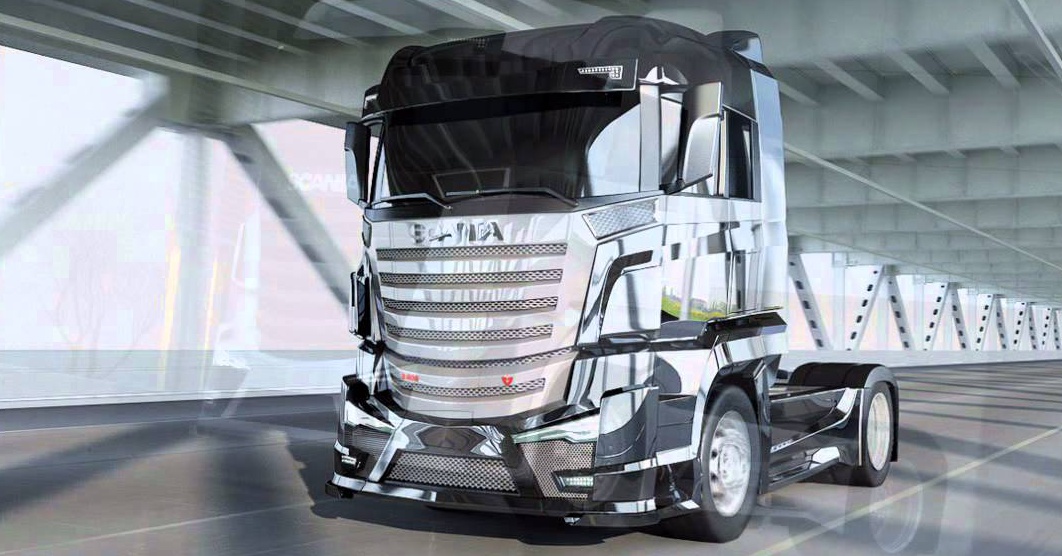
What do you think of this future truck design for a Scania? The designer calls this the Scania R800. The 800 represents the truck designer’s dream of designing a 1000 horsepower semi tractor. He designed two which look pretty much identical design-wise, and the photo above is the 800.
The design isn’t by a Swede, though. It’s by a Turkish designer named Levent Tuna. He went to Sinan University of Fine Arts in Istanbul, the capital of the near Eastern country, where he also served in the army.
Automotive design wasn’t where he started. He started in furniture design. But can you tell that by looking at his truck design?
There is trucking in his family, though.
“Since 1950, my grandfather worked as a commercial vehicle driver, and later my father drove a truck, and I was often living together with my father, and so have a fellowship. I fell in love with trucks, and was very pround of the truck my father drove.”
His initial research for the Scania R1000 truck design (and therefore the R800 as well) came from internet searches, and from there he filtered his sources and came up with the design model.
“Most trucks [in Europe] have a similar front end. I tried to soften it, but without causing major changes to the intake system and exhaust, because the aerodynamics must be preserved,” Tuna said.
“Attractive trucks call people’s attention,” he said, “and so do utilities. Thus, a good designer can also generate excitement for consumers of this product category.”
 " >
" >